
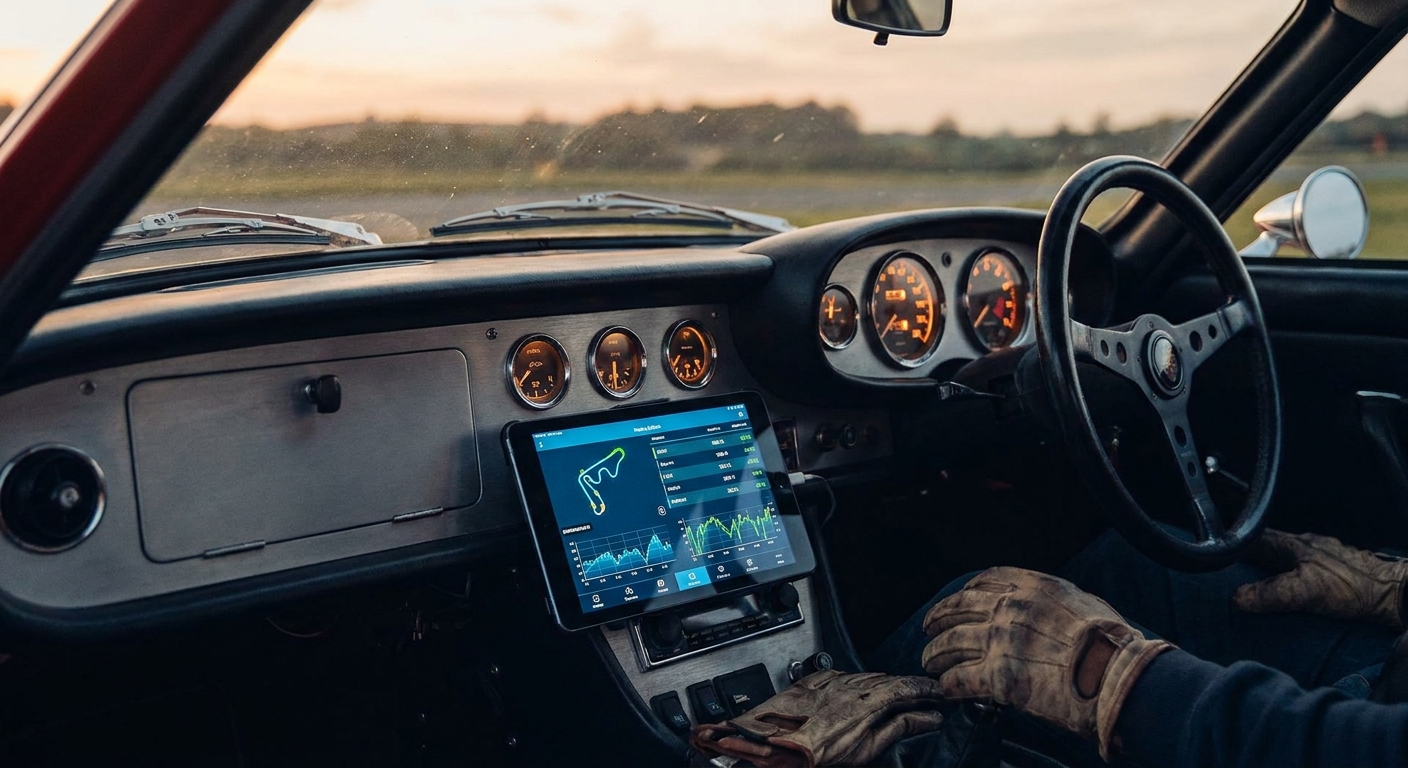
Enthusiasts often blame modern driving tech for dull cars: electric power steering, drive-by-wire throttles, stability control, electronic differentials. The assumption is simple: more computers, less soul.
Tech Doesn’t Have to Kill the Driving Feel
Reality is a bit more nuanced. The same systems that numb some cars can also make others sharper, faster, and more approachable—if you know how to work with them.
This article looks at performance-focused tech through an enthusiast lens: how to set it up, when to lean on it, and when to turn it down.
1. Understand Your Drive Modes Beyond Just “Sport Is Better”
Most modern cars come with at least three drive modes—Eco, Normal, Sport—and sometimes Custom, Track, or individual settings for steering, throttle, and suspension.
Simply mashing the Sport button doesn’t always give you the best drive.
Break down what the modes actually change:
Throttle mapping
- Sport often sharpens pedal response, making the car feel faster even if peak power is unchanged. - On bumpy or low-grip roads, this can make the car harder to drive smoothly.
Steering weight and assistance
- Heavier steering in Sport doesn’t always mean more road feel; sometimes it’s just extra assist resistance. - Try each mode on the same stretch of road and focus on feedback, not just weight.
Damping and roll control (if adaptive suspension)
- Stiffer settings reduce body roll but can upset the car on rough pavement. - A slightly softer setup often gives better real-world grip over imperfect roads.
Transmission behavior
- Sport holds gears longer and downshifts more aggressively. - For twisty roads, this can be great. For steady cruising, it just adds noise and fuel use.
Experience-based tip:
If your car allows a Custom/Individual mode, build a profile like this for backroads:
- Engine/throttle: Sport
- Steering: Normal (if Sport just adds weight, not feel)
- Suspension: Normal or mid (unless the road is very smooth)
- Transmission: Sport or manual shift
You often get more usable pace and better confidence this way than just maxing out everything.
2. Use Stability and Traction Control as a Safety Net, Not the Enemy
Modern stability and traction systems are incredibly fast and subtle compared with early versions. Turning everything off all the time may make you feel like a hero, but it’s not always the quickest or safest way to drive.
Smart ways to work with these systems:
Learn the layers
- Many cars offer stages: On, Sport/Track, and Off. - Sport modes usually raise the thresholds, allowing some slip and rotation before stepping in.
- Street vs. track mindset
- On the street, keep full stability control on. The unknowns—other drivers, gravel, diesel spills, animals—are what these systems are great at covering.
- On track, start with Sport/Track modes that allow more movement while still catching major mistakes.
Feel what intervention is like
- In a safe, empty area, deliberately provoke mild traction control engagement: - Accelerate firmly out of a low-speed corner. - Note how the car cuts power or brakes a wheel. - Recognize that sensation so you know when you’ve reached the limit.
Use Off sparingly and purposefully
- Turning everything off is for drivers who already have good car control and know the surface well. - If you’re learning, spend more time exploring the edge with a safety net before removing it.
Practical rule:
If you haven’t yet done a track day, autocross, or car control course, stability control Off should be the exception, not the default.
3. Embrace Modern Braking Tech—Then Focus on Your Inputs
Performance cars now bundle ABS, electronic brake-force distribution, and sometimes brake-by-wire systems that can feel different from traditional setups. Used correctly, this tech lets you brake later and more consistently.
How to get the most from modern brakes:
Trust ABS in true emergencies
- In a panic stop, stand on the pedal and let ABS do its job. - Steering while braking hard is something ABS enables; practice feeling it in a safe environment.
Practice firm, progressive pressure
- On spirited drives or track days, work on pressing the pedal firmly but smoothly, then easing off as you turn in. - This keeps the car balanced and avoids confusing the electronics with sudden, jerky inputs.
Understand brake-by-wire quirks
- Some newer systems can feel a bit artificial at the top of the pedal travel. - Accept the initial oddity and focus on the repeatability—once you know the bite point, you can be very precise.
Let the tech manage stability; you manage consistency
- The car is watching wheel speeds and yaw rate; you watch the road and braking points. - Your job is consistent, predictable inputs that let the systems shine.
Experience-based tip:
On a track day, ask an instructor to ride with you for a session focused only on braking technique. You’ll often drop seconds per lap just by better using the hardware you already have.
4. Use Digital Gauges and Data to Drive Smarter, Not Just Harder
Digital instrument clusters, performance timers, and onboard telemetry can either be distracting toys or powerful learning tools.
Make the screens work for you:
Choose a focused display layout
- For spirited driving, prioritize: - Large tachometer (if relevant) - Gear indicator - Coolant/oil temperature - Turn off gimmicky animations that don’t help you drive.
Use lap timers and G-meters as feedback, not a scoreboard
- Run several laps (or spirited runs on the same road, where legal and safe) and compare consistency, not just best numbers. - Look at whether your braking points and corner speeds are repeatable.
Review data calmly afterward
- After a session, parked, scroll through any logs the car provides: - Max brake pressure - Top speeds (on track) - Lap deltas - Note where smoother inputs could reduce spikes in G-loads.
Don’t chase numbers on public roads
- Use efficiency and smoothness metrics on the street. Save lap times and peak G readings for closed courses.
Practical approach:
Treat the car’s data like having a basic driver coach built in. The smoother and more consistent the traces, the more in control you are—whether you’re going flat-out or just enjoying a backroad.
5. Combine Old-School Skills With New-School Tools
The best experiences happen when traditional driving skill meets modern capability. Instead of resisting the tech, shape it around the kind of driving you love.
Concrete ways to blend both worlds:
Manual mode + modern auto
- Use paddles or manual shift modes to control gear selection while letting the transmission handle rev-matching and downshift protection.
Analog references with digital aids
- Set tire pressures with a regular gauge, then monitor live pressures and temps on the dash as you drive. - Use your ears and seat-of-the-pants feel, backed up by real numbers.
Driver training with tech awareness
- Take a performance driving course in your own car. Ask instructors specifically about how to work with its systems (ESC modes, ABS behavior, drive modes).
Know when to turn things down for purity
- On a quiet, familiar backroad, you might run in a calmer mode with lighter steering and softer suspension to feel the chassis breathe. - On a tight mountain pass or track, dial up the support systems for confidence.
Experience-based advice:
Think of the tech as a set of adjustable tools, not an identity. The car doesn’t become “less pure” because you let stability control save you once. It becomes a partner with a very fast set of reflexes.
Final Thoughts: Tech as an Amplifier, Not a Muzzle
Modern performance tech can absolutely dull a car if you leave everything in soft, default modes and never dig into the menus. But it can also amplify what you love about driving:
- Sharper responses,
- More accessible performance, and
- A bigger safety margin when you’re exploring your limits.
Take the time to understand your drive modes, treat stability systems as adjustable safety nets, trust but learn your braking tech, use data as feedback, and keep honing your own skills.
That’s how you get an analog-feeling drive from a car with a very digital brain.