
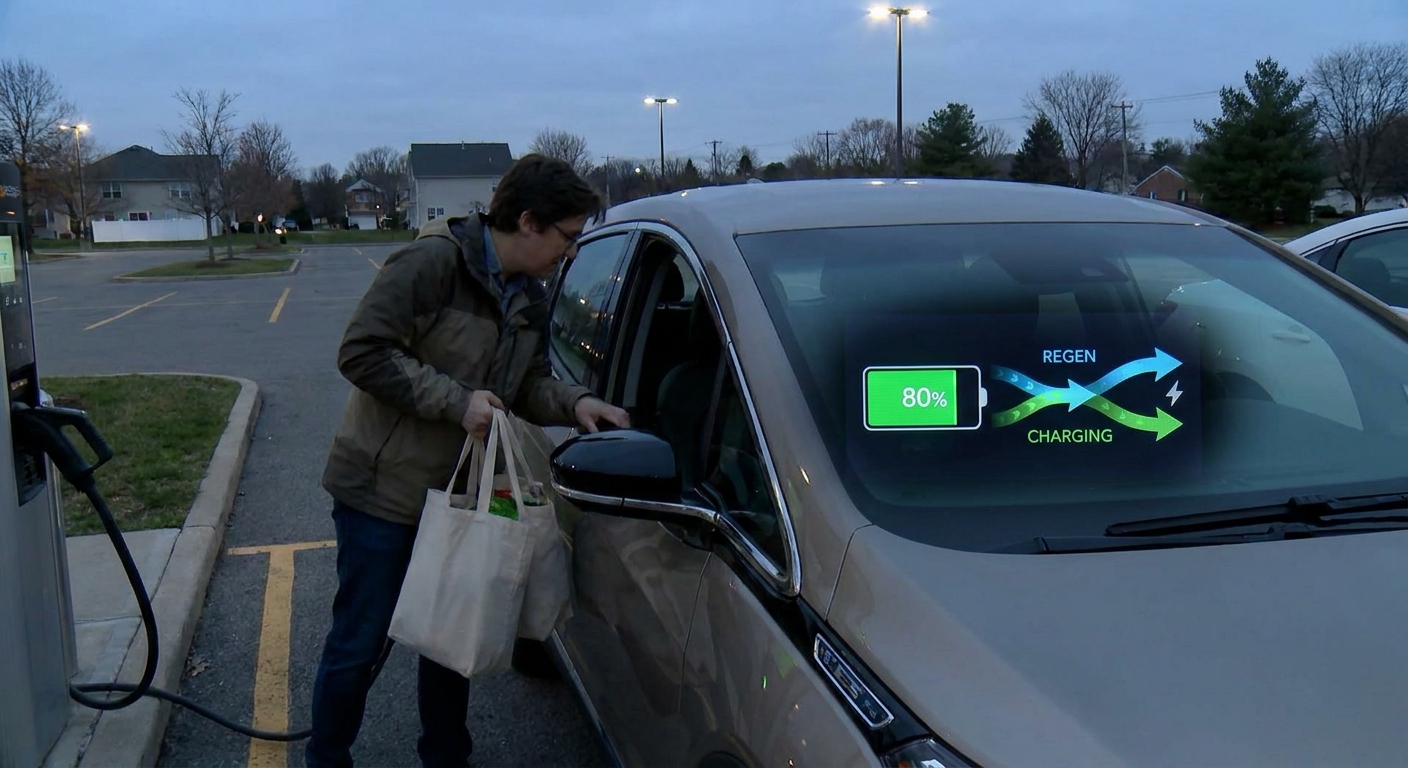
Electric vehicles and hybrids are packed with tech jargon: kilowatt-hours, regen maps, thermal management, Level 2 charging. Underneath all that, they’re still just cars you need to live with every day.
EVs, Hybrids, and the Stuff That Actually Matters Day to Day
You don’t need an engineering degree to own one. You just need to understand a few key systems and build some habits around them.
This guide focuses on real-world use: charging, range, regenerative braking, and driving settings that make battery-powered cars easier (and more fun) to live with.
1. Think in “Usable Range,” Not Perfect Conditions
The number on the window sticker is like a best-case scenario: mild weather, gentle driving, flat roads. Real life varies.
Build a realistic picture:
Track your personal range for two weeks
- Reset the trip computer and note: - Average consumption (Wh/mi or kWh/100 km) - Typical range per charge - You’ll quickly see your real numbers, not the brochure’s.
Expect seasonal swings
- Cold weather: range can drop 20–40% due to cabin heating and battery chemistry. - Hot summers: AC also eats some range, but usually less dramatically.
- City vs. highway
- EVs are often more efficient in the city thanks to regen and lower speeds.
- Highways at 75–80 mph are where you’ll see the biggest hit to range.
Experience-based advice:
For day-to-day planning, assume 70–80% of the rated range as your reliable number. Anything above that is a bonus day.
2. Treat Charging Like Topping Up a Phone, Not Like Filling a Tank
The biggest mindset shift with EVs and many plug-in hybrids is that home is your main “station.” Fast chargers are for road trips and exceptions.
Solid charging habits:
Daily target: 70–80% for most EVs
- Many manufacturers suggest keeping the battery in the middle of its range for long life. - Set a charge limit in the car or app so it automatically stops at your chosen percentage for regular days.
Charge where the car sleeps
- If you have home parking with an outlet, even a regular 120V plug can be enough if your commute is short. - If possible, install a Level 2 charger (240V). This turns overnight charging into a simple “plug it in, forget it” routine.
Plan fast charging, don’t depend on it
- On road trips, use apps or the in-car nav to plan fast charger stops before you get below 10–15%. - Charging from 10% to 60% is usually much faster than from 60% to 100%. Plan shorter, smarter stops.
Plug-in hybrids: use the battery on your terms
- For PHEVs, charge regularly and use electric mode in city traffic where it shines. - Don’t obsess about always keeping the battery full on long highway drives; the hybrid system will manage itself.
Practical rule:
If you can plug in most nights, treat your “real” range as what you can use in a day, not the full battery maximum.
3. Make Regenerative Braking Work With You, Not Against You
Regenerative braking (regen) uses the electric motor to slow the car and recharge the battery. Done well, it feels natural and even fun. Done badly, it feels grabby or inconsistent.
How to dial in regen for your style:
Try each mode for a few days
- Most EVs and many hybrids offer multiple regen levels or a one-pedal driving mode. - Drive a work week in your normal commute using: - Low regen: feels more like a regular car, coasts farther. - Medium: good balance for many drivers. - High/one-pedal: strong slowdown when you lift off the accelerator.
Look far ahead and drive smoothly
- The more you anticipate stops, the more you can slow using regen instead of the friction brakes. - This saves energy and keeps brake pads lasting much longer.
Use friction brakes when needed—don’t fear them
- In emergencies, push the pedal hard and let the car blend regen and friction braking as designed. - Don’t worry about “wasting” energy in those moments; safety comes first.
Pay attention to grip in bad weather
- In slick conditions, some cars automatically reduce regen to avoid wheel slip. - If your car lets you adjust, consider lower regen on ice or snow for smoother control.
Experience-based tip:
Give one-pedal driving at least a full week before deciding you hate it. Many drivers find it strange at first and then don’t want to go back.
4. Use Drive Modes and Pre-Conditioning for Comfort and Efficiency
EVs and hybrids often offer Eco, Normal, and Sport drive modes plus pre-conditioning options to heat or cool the cabin before you get in.
Making these work in the real world:
Pick a true default mode
- Eco: softer throttle response, less climate power, best for long commutes and range stretching. - Normal: easiest to live with; start here for daily use. - Sport: sharper response and often more motor power; fun but can hurt efficiency.
Use pre-conditioning while plugged in
- In cold weather, heat the cabin and battery while charging so the energy comes from the outlet, not the battery. - In heat, pre-cool so you’re not blasting AC at full tilt right after departure.
Seat and wheel heaters over blasting air
- Heating your body directly with seats and steering wheel uses less energy than cranking cabin heat. - You can often stay comfortable at a lower cabin temperature this way.
- Hybrids: know EV vs. hybrid modes
- Some hybrids let you lock in EV-only, save battery, or charge battery modes.
- Use EV-only in urban sections, save/charge modes before you enter cities or low-emission zones.
Practical approach:
Pick a mode that feels natural for you, then let range be the tiebreaker. If you’re frequently cutting it close on trips, favor Eco and pre-conditioning on the plug.
5. Plan for Long-Term Battery Health Like You Plan for Oil Changes
Don’t obsess over every percent of battery status, but a few habits will help your pack age gracefully.
Long-term friendly practices:
Avoid sitting at 0% or 100% for long periods
- Short trips to 100% right before a road trip are fine. - Try not to charge to 100% and leave the car parked for days, or regularly run it extremely low.
Use moderate charging when you can
- Fast DC charging is safe, but using it multiple times a week as your main method can stress the battery more. - Prefer Level 2 at home or work for routine charging.
Don’t panic over a little degradation
- It’s normal to see some capacity loss over the years. - Focus on whether the car still does your typical daily trips comfortably.
Keep software up to date
- Manufacturers sometimes tweak battery management via updates. - Install updates on your schedule (overnight at home) so you stay current without surprises.
Experience-based advice:
Treat the high-voltage battery like a long-term appliance: keep it within a comfortable range most of the time, and it will quietly do its job for years.
Final Thoughts: It’s Still Just a Car—With a Smarter Heart
Beneath all the acronyms and graphs, EVs and hybrids are still about getting you from A to B comfortably and reliably.
If you:
- Think in realistic range, not brochure numbers,
- Make charging a background habit instead of a constant worry,
- Learn how regen feels and use it to your advantage,
- Use drive modes and pre-conditioning thoughtfully, and
- Treat the battery with basic long-term care,
then the tech fades into the background and you’re just driving—quietly, efficiently, and with a bit of extra torque when you want it.