
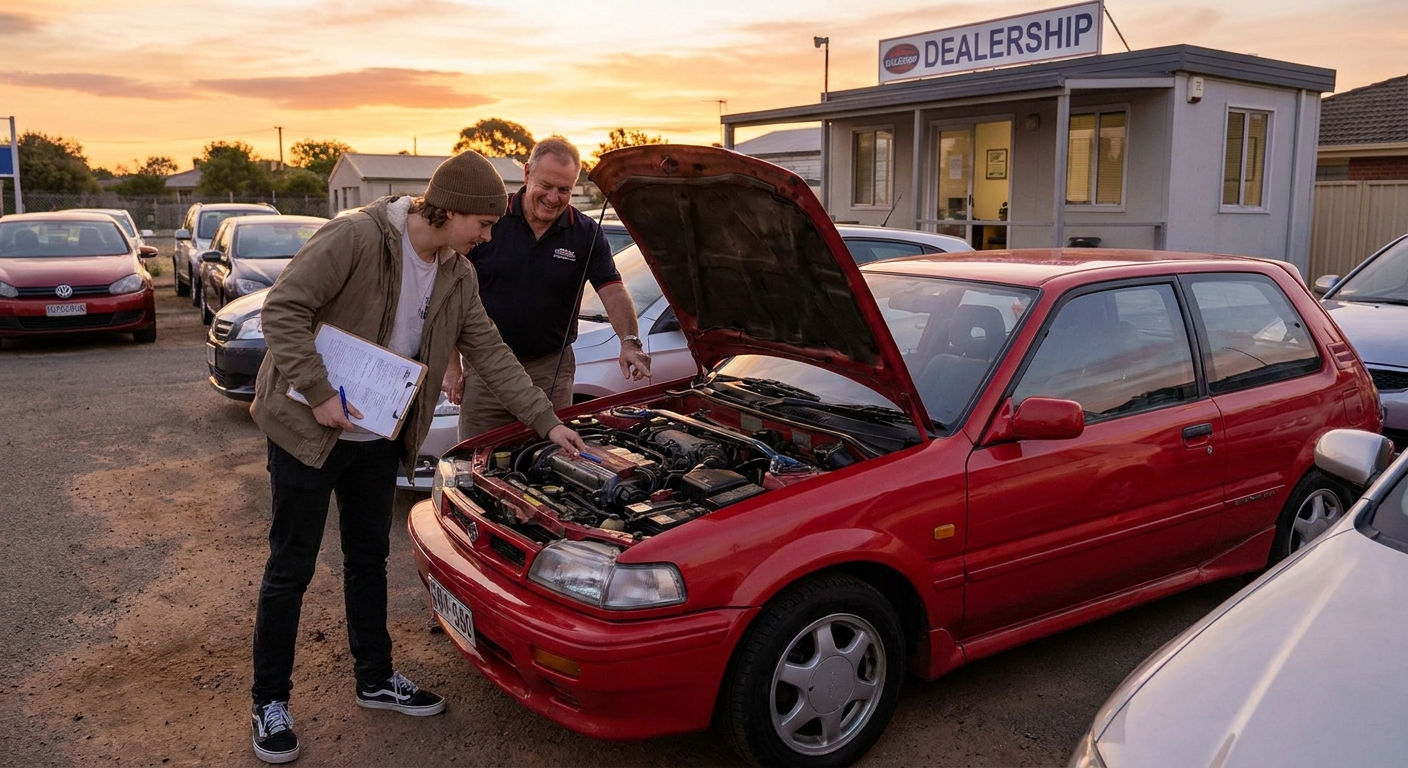
Shopping for your first performance car is equal parts exciting and dangerous. It’s easy to fall for big horsepower numbers, aggressive styling, and exhaust crackles — and ignore the stuff that drains your bank account or leaves you stranded on the side of the road.
Introduction
This guide is built for enthusiasts who want something genuinely fun but still live in the real world of insurance bills, traffic, and budgets. We’ll walk through five grounded principles to help you pick a performance car that’s worth owning, not just worth posting.
1. Define Your Kind of "Performance" Before You Shop
Performance doesn’t mean the same thing to everyone. Before you go hunting for turbo badges, decide what kind of fun you actually want.
Ask yourself:
- Do I care more about straight-line speed or handling?
- Drag race & highway pulls → torque and power matter most
- Backroads & track days → balance, chassis, and brakes come first
- Is this my only car or a weekend toy?
- Only car → must be livable: comfort, reliability, and fuel costs matter
- Second car → you can tolerate more compromises
- How much risk do I want to take on repairs?
- High-strung turbo engines and dual-clutch gearboxes can be expensive when they break
Based on that, you might decide:
- A hot hatch or sport sedan fits best if you need daily comfort plus fun
- A rear-wheel-drive coupe or roadster suits you if you want pure driving feel
- A performance-tuned version of a mainstream model (e.g., sport package) is enough if you’re just stepping into the hobby
Making this call early keeps you from chasing every shiny ad for cars that don’t fit your reality.
2. Budget for the Whole Package: Tires, Brakes, and Insurance Included
The ticket price is only chapter one of the performance car story. Fast cars eat through consumables faster — and those consumables are often more expensive.
A. The Big Three: Tires, Brakes, Fuel
Tires:
- Performance tires wear faster than economy rubber
- Wider tires cost more — much more on larger wheels
- Summer performance tires are almost useless in snow and can be sketchy in cold
- Bigger, more powerful cars usually have larger and pricier brake components
- Spirited driving or occasional track use accelerates brake wear dramatically
- Many performance engines require premium gas
- Turbocharged cars can be very thirsty when driven hard
- A full set of quality tires in the correct size
- Front and rear rotors and pads
- An estimated annual fuel cost for your driving pattern
Brakes:
Fuel:
Before you buy, price out:
B. Insurance Reality Check
Performance cars often carry higher insurance rates, especially for younger drivers.
Do this before signing anything:
- Get actual quotes using the exact year, make, model, and trim
- Ask about:
- Collision and comprehensive coverage
- Any surcharges for performance models
Sometimes, a slightly slower but safer-rated or less "flashy" model will save enough on insurance to make more sense overall.
3. Buy the Best Example You Can Afford, Not the Most Power You Can Find
One of the biggest mistakes first-time performance buyers make is chasing the highest horsepower their budget can technically stretch to — and ending up with a tired, abused example.
You’re usually better off with:
- A lower-power, well-maintained car than
- A high-power but heavily modified or neglected one
A. Be Wary of Modded Cars (But Don’t Automatically Run)
Modifications can be done right — or horribly.
Red flags:
- No receipts or documentation for major mods
- Cheap, no-name performance parts
- Massive power adders (big turbos, aggressive tunes) on stock internals
- Roll cages or stripped interiors on a street car — might indicate hard track use
- Quality brands for suspension, exhaust, or mild tunes
- Conservative power levels
- Owner can explain what was done and why
- Professional installation receipts
Safer signs:
If you don’t understand the mods on the car, you’re not ready to own that car. There’s nothing wrong with starting stock or lightly modified.
B. Service History Beats Shiny Paint
Prioritize:
- Regular oil changes with the correct spec
- Transmission and differential services
- Cooling system maintenance
- Timing belt/chain history for engines known to have issues
A car that’s been mechanically loved but cosmetically average is often a smarter buy than a freshly detailed, mechanically neglected showpiece.
4. Test Drive With Skill Level and Future Plans in Mind
A performance car you’re scared to drive at 6/10ths is less fun than a balanced car you can wring out.
A. Match Car to Driver Skill
Be honest:
- If you’re new to rear-wheel drive, jumping straight into a high-horsepower, tail-happy monster can be risky
- Balanced, modestly powerful cars teach you more about car control and line choice
- Is the power delivery predictable or jumpy?
- Does the car communicate what it’s doing through the steering and chassis?
- Are you comfortable exploring its performance safely on the street?
On the test drive, consider:
B. Think About Upgrade Paths
If you plan to grow with the car:
- Look for platforms with strong aftermarket support and a healthy owner community
- Research common, sensible upgrades: tires, pads, fluid, mild suspension tweaks
- Avoid cars where simple maintenance already requires exotic tools or rare parts
A car that’s welcoming to learn on, easy to service, and modifiable in small steps is the sweet spot for a first performance purchase.
5. Bring a Pre-Purchase Inspection (PPI) Into Your Budget From Day One
The single best money you can spend when buying a used performance car is a pre-purchase inspection from a shop that knows that specific model.
A. Why PPIs Matter Even More for Performance Cars
Performance cars live harder lives:
- Higher revs
- More aggressive driving
- Occasional track or spirited backroad use
- Engine health (compression/leak-down if indicated, fluid condition)
- Clutch/transmission/differential condition
- Suspension wear and alignment issues
- Brake condition and signs of severe overheating
- Evidence of track use, accidents, or poor repairs
A solid PPI checks:
B. Don’t Skip It Because You’re Excited
Too many buyers:
- Fall in love on the test drive
- Skip the inspection to "lock in the deal"
- Regret it later when hidden issues appear
Build the PPI cost into your shopping plan from day one. If the seller refuses an inspection, that’s often your sign to walk away, no matter how good the car looks.
Conclusion
Your first performance car should make you grin, not go broke. To stack the odds in your favor:
- Decide what kind of performance actually suits your life.
- Budget for the full picture — tires, brakes, fuel, and insurance.
- Choose condition and maintenance history over max horsepower.
- Match the car to your skill level and future plans.
- Never skip a pre-purchase inspection from a qualified shop.
Follow these principles and you’re far more likely to end up with a car that’s fun on Saturday, reliable on Monday, and worth keeping for years — not a handful of repair receipts and a listing full of "regret sale" excuses.