
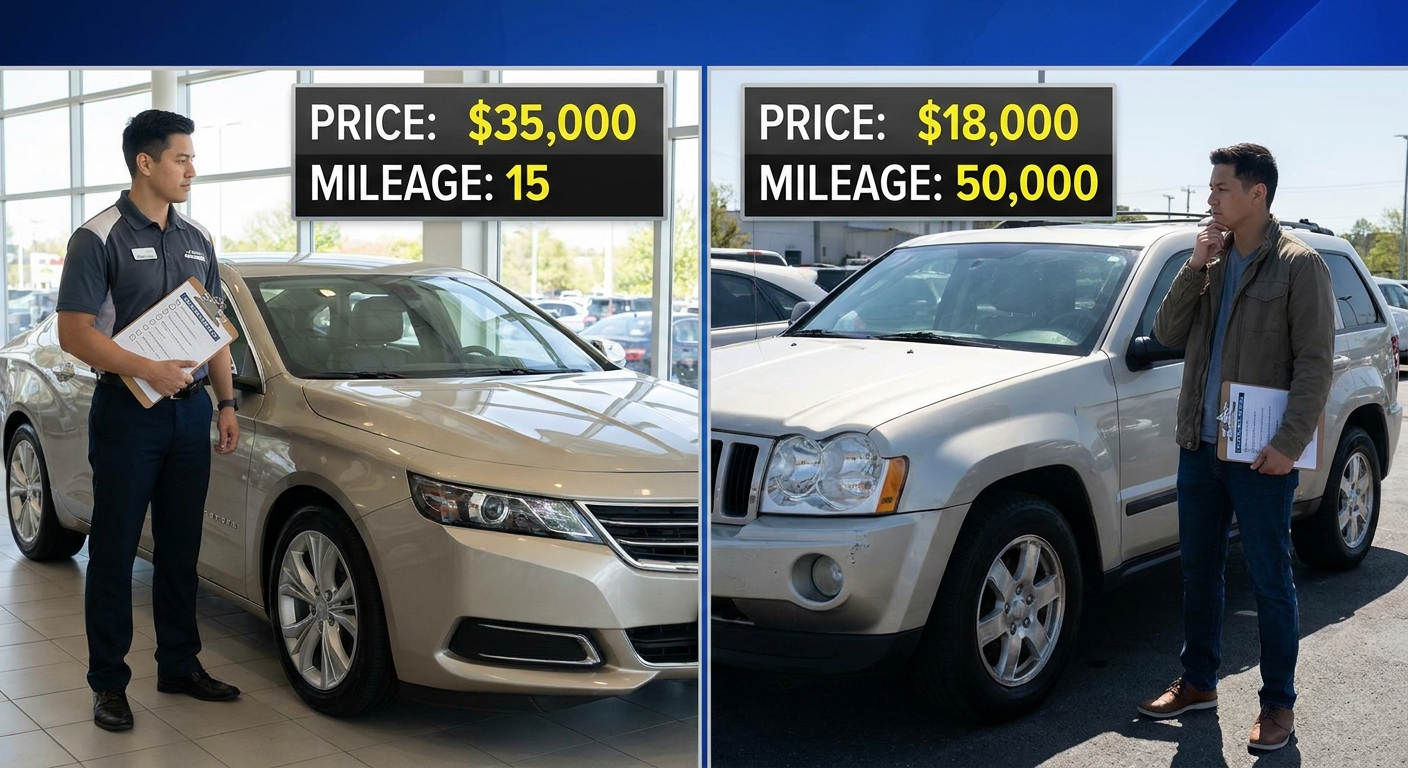
Few debates stir up car people like used vs. new. One friend swears you should never buy new because of depreciation. Another insists that buying someone else’s problems is financial suicide.
Introduction
Both sides have a point. The right answer depends on your situation, your tolerance for risk, and how you actually use your vehicle. This guide breaks it down without the hype and gives you five clear decision points you can use to choose what’s right for you.
1. Understand How You Actually Use (and Abuse) Your Car
Before talking prices and warranties, be honest about how your car lives.
Ask yourself:
- How long do I usually keep my cars?
- 2–3 years: Leasing or nearly new might make more sense
- 7–10+ years: New or very clean used can both work well
- What’s my driving environment?
- Harsh winters, salted roads: Rust can kill an older used bargain
- Mild climate, garage parking: Used can age more gracefully
- How hard am I on vehicles?
- Towing, off-road, work use: Buying older may mean buying something already partly worn out
- Gentle commuting: A well-kept used car can last you a long time
Your usage pattern is your first filter. For example:
- Heavy towing and long-distance hauling? A new or lightly used truck with warranty can save you headache.
- Basic commuting and errands? A well-maintained 4–6-year-old sedan can be the value sweet spot.
2. Run the Numbers: Depreciation vs. Repairs
People talk about depreciation like it’s a mystical curse. It’s not — it’s just math. The trick is understanding how it compares to the cost of repairs and maintenance.
A. New Car: You Pay for Peace of Mind Upfront
Pros:
- Full factory warranty
- Known history — you’re the first owner
- Latest safety and tech features
- Easier financing options and incentives
- Biggest depreciation hit in the first 3 years
- Higher insurance in many cases
- In the first 3 years, your biggest cost is depreciation, not maintenance
- After 3–5 years, maintenance and wear items start to show up more
Cons:
Typical pattern:
B. Used Car: Lower Price, But More Unknowns
Pros:
- Someone else already paid most of the depreciation
- You can often step up a class (nicer brand or trim) for the same money
- Higher chance of repairs and wear items
- Risk of poor maintenance history
- Shorter or no warranty coverage
Cons:
When comparing, don’t just look at monthly payments. Consider:
- New car example:
- Higher payment
- Lower repairs for first few years
- Big depreciation hit early
- Used car example:
- Lower payment (or no payment)
- Higher and more variable repair costs
- Smaller annual depreciation hit
If surprise repair bills make you lose sleep, a new or certified pre-owned (CPO) car may be worth the extra cost. If you have a repair fund and a good mechanic, used can be a winning play.
3. Judge Condition, Not Just Age or Mileage
Not all 5-year-old cars are equal. A 100,000-mile highway commuter with meticulous maintenance records can be better than a 40,000-mile city car that’s been neglected.
A. What Really Matters on a Used Car
Focus on:
- Service records: Regular oil changes, documented major services
- Number of owners: Fewer owners often means better care, but not always
- Accident history: Minor cosmetic repairs can be fine; major structural damage is a red flag
- Where it lived: Rust-prone regions vs. dry climates
Practical checklist when viewing a used car:
- Cold start: Does it fire up cleanly without smoke or strange noises?
- Fluids: Check oil color, coolant condition, and any leaks under the car
- Tires: Even wear? Uneven wear can hint at suspension or alignment issues
- Interior: Heavy wear on pedals, seats, and steering wheel vs. claimed mileage
B. When "New" Makes More Sense
Buying new is often smarter when:
- You drive huge mileage annually (you’ll fully use the lifespan)
- You plan to keep the car for 8–10 years
- You need absolute reliability (work vehicle, family hauler, critical daily driver)
- The difference in payment between new and late-model used is small
If you’re already stretching your budget to get into a heavily used model from a luxury brand, stop and reconsider. A new or lightly used mainstream brand car may serve you better in the long run.
4. Factor in Warranty, DIY Ability, and Local Support
Your comfort level with tools and your local repair options matter more than most buying guides admit.
A. Warranty Safety Net
New cars:
- Full bumper-to-bumper warranty for 3–5 years in many cases
- Powertrain often covered longer
- Manufacturer-inspected
- Extended warranty coverage
- Usually lower risk than private-party used
CPO used cars:
If you’re not mechanically inclined, a warranty isn’t just a nice bonus — it can be the difference between predictable costs and painful surprises.
B. Your Wrench Skills and Nearby Shops
Be honest:
- Do you know (or want to learn) basic maintenance and troubleshooting?
- Is there a reputable independent shop for your brand nearby?
Owning an older German luxury car in a town where no one works on them affordably is asking for trouble. A simpler, common model that every corner shop sees daily will be easier and cheaper to keep on the road.
5. Make the Decision With a Simple, 5-Question Filter
When you’re stuck between new and used, run both options through this filter:
Will I lose sleep over surprise repair bills?
- Yes → Lean NEW or CPO - No → Used is on the table
Can I afford the TOTAL cost of ownership, not just the payment? (Insurance, fuel, maintenance, registration)
- New might be cheaper than you think for efficient, reliable models - Used might become expensive if it’s a premium or complex vehicle
Do I plan to keep this car at least 5 years?
- Yes → New or lightly used makes strong financial sense - No → Consider nearly new or CPO to dodge the worst of depreciation
Is this car for critical daily duty or fun/weekend use?
- Critical → Prioritize reliability and warranty (new/CPO, solid mainstream brands) - Fun car → A well‑sorted used car can deliver more smiles per dollar
Is the difference in real monthly cost worth what I gain?
- New gives you: warranty, latest safety tech, known history - Used gives you: lower cost, potentially more car for the money
If you walk through those five questions honestly, the right choice usually becomes obvious.
Conclusion
There’s no one-size-fits-all answer in the new vs. used debate. Instead of taking advice from loud opinions, weigh these five core factors:
How you really use your car
2. Depreciation vs. repair risk
The actual condition of the vehicle
Warranty, DIY comfort, and local support
Your long-term plans and budget reality
Pick the option that matches your life, not someone else’s rules. Whether you end up in a showroom-fresh hatchback or a well-loved truck with history, the goal is the same: a car that fits your roads, your wallet, and your peace of mind.