
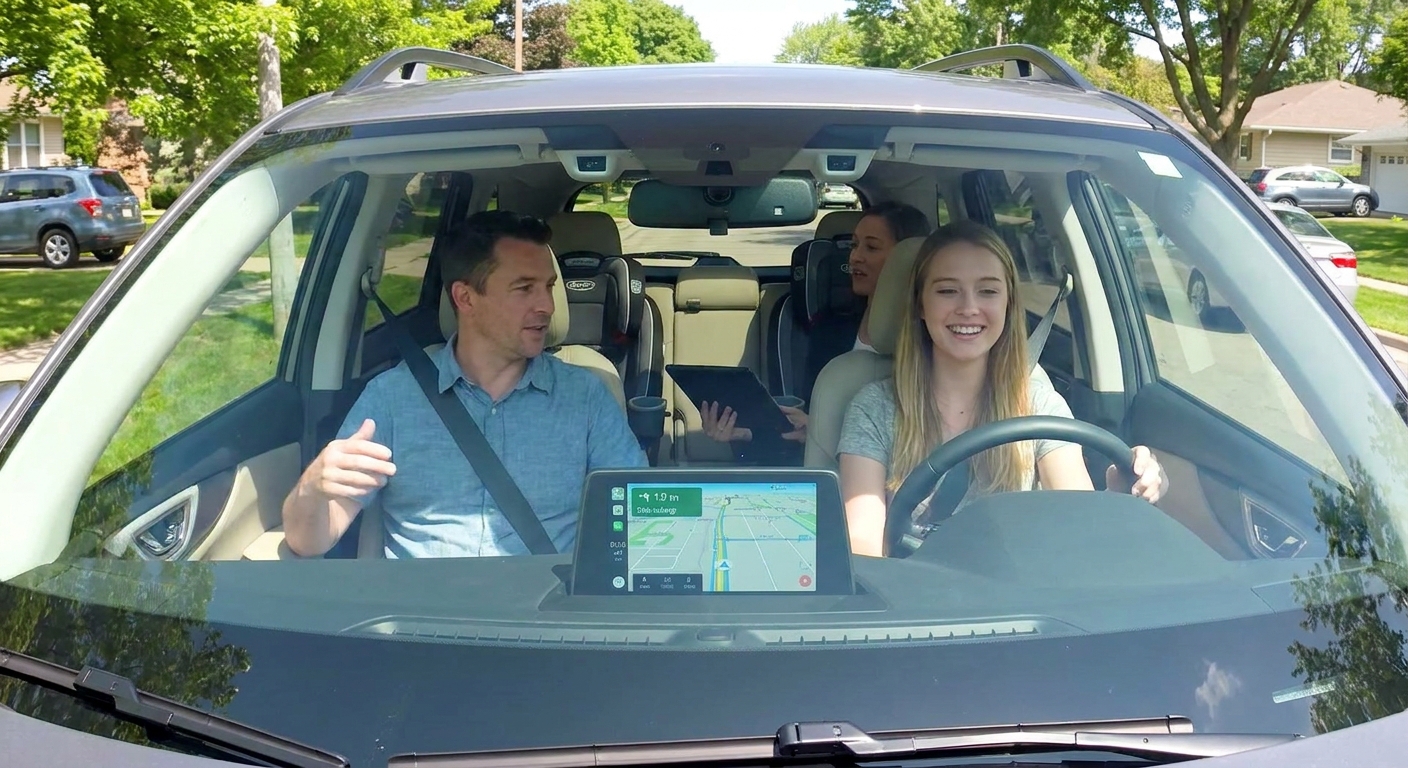
Family cars have a reputation for being dull, but they don’t have to be. You can absolutely find something that hauls kids, strollers, and sports gear and doesn’t make you dread the morning commute.
Introduction
The trick is approaching the shopping process with clear priorities instead of defaulting to "whatever minivan/SUV everyone else is buying." Here’s a practical, experience-based guide to buying a family car that works in the real world, not just on a spec sheet.
1. Start in Your Driveway: Measure Your Life, Not Just the Car
Before hitting a dealership, take stock of your actual daily chaos.
A. Measure What You Haul
Grab a tape measure and a notepad.
- Measure your stroller, folded and unfolded
- Measure your typical grocery load or storage bins
- If you haul sports gear (bikes, hockey bags, camping stuff), measure that too
- Garage length and width
- Driveway clearance (steep angles, curbs, tight turns)
Then look at:
This gives you realistic size constraints. A massive three-row SUV might be great at the dealership, but if you can barely open the doors in your garage, it’ll drive you nuts.
B. Map Out Who Sits Where
- How many kids?
- Any in rear-facing car seats?
- Will you regularly carry grandparents or friends?
Rear-facing seats eat up front legroom. Three car seats across one row is possible in some cars and a nightmare in others.
Bring your actual car seats (and the kids, if possible) when you test cars. Do a full install test in the showroom or lot:
- Check how wide the rear bench is
- See if LATCH anchors are easy to reach
- Try buckling a booster with another seat next to it
This real-world test eliminates a lot of near-misses.
2. Decide Between Sedan, Wagon, SUV, and Minivan With Clear Priorities
Body style isn’t just about image; it deeply affects day-to-day usability.
A. Sedans and Hatchbacks
Pros:
- Better fuel economy and handling than many SUVs
- Easier to park and maneuver
- Often cheaper to buy and maintain
- Lower ride height — bending in to buckle kids
- Less vertical cargo space
- You have 1–2 kids
- No giant strollers or bulk gear
- You value driving feel and economy
Cons:
Good if:
B. Wagons and Crossovers
Pros:
- Car-like driving with extra space
- Easy loading height for cargo
- Great for dogs and bulky items
- True wagons are rarer in some markets
- Crossovers vary wildly in interior space efficiency
- You want one vehicle that does road trips, Costco runs, and commuting
- You don’t need a third row regularly
Cons:
Good if:
C. SUVs and Minivans
SUV Pros:
- Higher seating position and ground clearance
- AWD options for bad weather
- Sliding doors (huge in parking lots)
- Extremely configurable interiors and storage
- Typically more expensive and less fuel-efficient
- Bigger learning curve for tight city driving and parking
- You regularly carry five or more people
- You do long trips with lots of gear
- You value easy access and flexibility more than sporty feel
Minivan Pros:
Cons (both):
Good if:
Decide what truly matters most: space, driving feel, fuel cost, parking ease, or image. Rank them. That ranking should drive your body-style choice.
3. Prioritize Safety Features That Actually Help in Daily Driving
Safety tech has exploded over the last decade, and spec sheets are full of acronyms. Focus on the features that genuinely make family life easier and safer.
A. Must-Have Modern Features
- Automatic emergency braking (AEB)
- Can prevent or lessen low-speed front impacts
- Blind-spot monitoring
- Particularly helpful on larger vehicles
- Rear cross-traffic alert
- Great for backing out of crowded parking lots or driveways
- Lane-keeping assist (in moderation)
- Helpful on long highway drives; make sure it feels natural, not intrusive
Check how these systems behave on the test drive — some are smooth, others feel like they’re fighting you.
B. Useful Family-Oriented Features
- Rear-seat reminder systems (alerts if rear doors were opened before drive)
- Surround-view or 360° cameras
- Makes parking a larger vehicle much easier
- Rear climate controls
- Kids stay comfortable without freezing or roasting the driver
Don’t get distracted by flashy but rarely used features while skipping practical ones. A good camera system will help you every day. A built-in navigation system you never use because you prefer your phone is less critical.
4. Test Drive Like It’s a School Day, Not a Sunday Cruise
Most test drives are way too short and unrealistic. For a family car, you need to mimic your everyday routes and routines.
A. Simulate Your Real Driving Mix
Ask for an extended test drive if possible and:
- Drive through tight parking lots
- Take short highway stints
- Hit bumpy roads or speed bumps
- Ride comfort: Does it smooth out sharp bumps or crash over them?
- Noise: Can you talk easily at highway speeds without yelling?
- Steering feel: Does it inspire confidence or feel vague and floaty?
Pay attention to:
B. Live Inside the Cabin for 20–30 Minutes
Park somewhere quiet and go through your typical routines:
- Load and unload a stroller or groceries
- Have the kids climb in and out of their seats
- Fold and unfold the third row (if equipped)
- Try accessing the third row with car seats in the second row
- Are there enough cupholders, and are they usable with child bottles?
- Is there a good spot for a diaper bag or work bag up front?
- Are USB ports placed where kids can reach them without stretching cables across the cabin?
Check storage details:
These “small” things are what you notice every single day.
5. Keep the Budget Honest: Room for Repairs, Fuel, and Surprises
Family finances rarely stay perfectly predictable. Your car choice needs to leave room for real life.
A. Look Beyond the Payment
Don’t max your budget on the nicest trim and then struggle with monthly costs.
Include in your calculations:
- Insurance (family vehicles with advanced safety tech may get discounts)
- Fuel (bigger and heavier = more trips to the pump)
- Maintenance (tires, brakes, oil changes, occasional repairs)
If a vehicle payment pushes your budget to the edge before those costs, step back. A slightly simpler trim or smaller engine might give you more breathing room.
B. Consider Long-Term Reliability and Dealer Network
- Research common issues for the models you’re considering
- Look for brands with good reliability records and strong dealer/independent shop presence near you
If you pick something slightly less flashy but known to be reliable, you’ll thank yourself when you’re not spending every bonus on unexpected repairs.
Conclusion
A good family car doesn’t have to be boring, but it does have to be honest about your life.
To find the right one:
- Measure your gear, your space, and your family layout.
- Choose the right body style by ranking your real priorities.
- Focus on safety and convenience tech you’ll actually use.
- Test drive in a way that reflects weekday reality, not a brochure fantasy.
- Budget for the full picture, leaving room for life’s surprises.
Follow these steps and you’re far more likely to drive home in a vehicle that keeps everyone happy: the kids in the back, and the driver behind the wheel.