
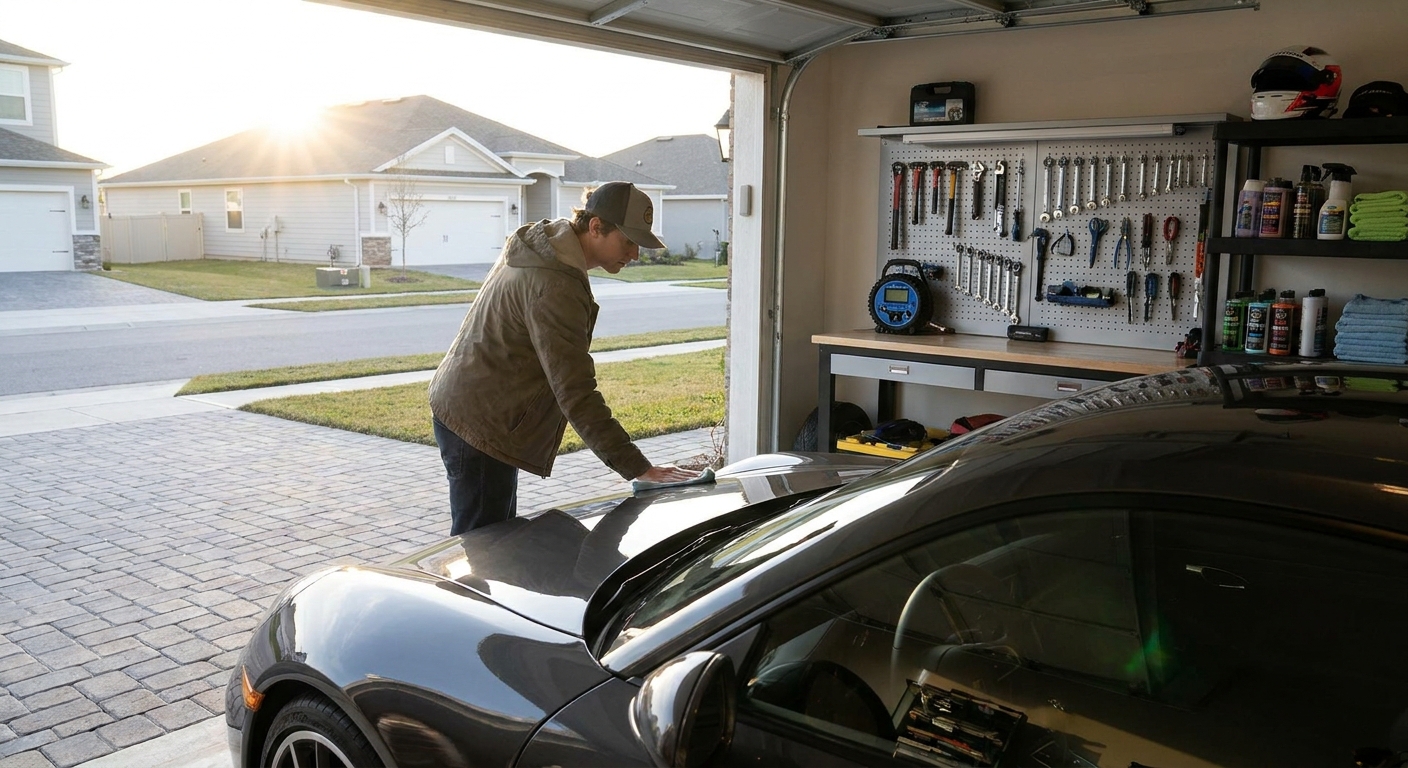
If you drive something a little more serious than a basic commuter—hot hatch, sport sedan, tuner build, or weekend track toy—you already know: performance magnifies everything, including wear and tear.
Performance Cars Need More Than Just Premium Fuel
You don’t have to treat your car like a glass trophy, but you do need to be more deliberate about how you maintain it. Here are five experience-based tips to keep a performance-oriented car reliable enough for daily duty and fun enough for weekend abuse.
1. Warm-Up and Cool-Down: Driving by the Gauges, Not Just the Clock
Performance engines and turbo setups hate being rushed. Fast driving on a cold engine or shutting it down right after a hard pull is how you quietly shorten its life.
Smarter warm-up
- Don’t sit idling for 10 minutes—that just wastes fuel and causes carbon buildup.
- Start driving within 30–60 seconds, but keep revs low to mid until oil is at temp (not just coolant).
- If your car has an oil temperature gauge, use that as your green light rather than the coolant gauge.
If you don’t have an oil temp gauge, a safe rule is:
- Easy driving for the first 10–15 minutes, especially in cold weather.
- No redline runs, full-boost pulls, or hard launches until then.
Smarter cool-down (especially for turbo cars)
After hard driving:
- Avoid shutting the car off immediately after a full-boost run or highway pull.
- Drive gently for the last 2–5 minutes to let temps stabilize and give the turbo a chance to cool with oil and coolant still circulating.
Most modern turbo cars don’t strictly need long idle-downs thanks to better cooling designs, but a short gentle drive before shutdown still pays off.
2. Use the Right Fluids—and Change Them More Often
Performance and modified cars stress their fluids more. That means the bare-minimum factory schedule can be optimistic if you drive hard.
Engine oil
- High-quality synthetic oil is non-negotiable for modern performance engines and turbos.
- If you do spirited canyon runs, track days, or lots of short trips, consider shortening oil intervals (e.g., 5,000 miles instead of 10,000, or twice a year minimum).
Brake fluid
- Aggressive driving heats brakes up fast. Old, moisture-laden fluid boils sooner and leads to a soft pedal.
- Use at least a DOT 4 fluid for performance use (check compatibility) and bleed it every 1–2 years, or more often if you see track time.
Coolant and transmission/differential fluids
- Don’t stretch these far beyond the factory schedule if you drive hard.
- For manuals and sporty automatics, fresh fluid can improve shift feel and heat resistance.
The theme: if you double the stress, you shouldn’t extend service intervals—you should tighten them.
3. Treat Wheels, Tires, and Alignment Like a System
Power is fun, but your car’s real performance is defined by how well rubber meets the road. Enthusiast cars feel “off” quickly when this system isn’t dialed in.
Tires: don’t run them to the cords
- High-grip performance tires often wear faster; seeing 15,000–25,000 miles is normal.
- Check more than just tread depth—watch for heat cycling signs: hardened rubber, cracking, or noticeably reduced grip even if the tread looks fine.
- Match tires by axle at minimum (ideally all four). Mixing old and new, or different models, kills balance and predictability.
Alignment: after more than just curb hits
- Got new springs, coilovers, arms, or even just wider wheels? Follow up with a proper performance alignment, not just a generic “within spec” job.
- Ask the shop for a setup that matches how you use the car: daily driver, autocross, canyon runs, track days, or mixed.
A slightly more aggressive alignment (a bit more negative camber, for example) can sharpen handling but will wear tires differently. That’s fine as long as you monitor wear and rotate appropriately.
4. Mod Smart: Supporting Upgrades Before Peak Numbers
It’s tempting to chase headline power—intakes, tunes, bigger turbo, the works—but reliability often depends more on the boring supporting mods.
Think "supporting health" before "bragging rights"
- Brakes: Power is pointless if your pads fade after two hard stops. Step up to higher-temp pads and quality rotors before serious power additions.
- Cooling: More power = more heat. Consider upgraded radiators, intercoolers, or oil coolers if you track or drive hard in hot climates.
- Fuel system: Bigger power needs adequate fueling; starving the engine at high load can kill it quickly.
Tuning and reliability
- A conservative tune from a reputable tuner is generally safer than a maxed-out off-the-shelf map from a random source.
- Be honest with yourself: if this car is your daily, ask for a tune that favors reliability and drivability over every last horsepower.
The best performance builds feel strong and repeatable, not just fast once when the planets align.
5. Do Pre-Drive and Post-Drive Checks for Hard Use
If you hit canyon roads, autocross, or track days, treat those like workouts for the car. Athletes warm up, cool down, and check for injuries—your car deserves the same.
Before a spirited drive or event
- Fluids: check oil, coolant level, and brake fluid at minimum.
- Tires: confirm pressures (often a bit higher than grocery-run settings), look for nails, sidewall damage, or cords.
- Torque your wheels: especially if they’ve been off recently. A simple torque wrench and correct spec go a long way.
- Loose items: empty the cabin and trunk of heavy or loose objects.
After
- Walk around the car and touch-test (carefully): check if any brakes or wheels feel abnormally hot compared to the others.
- Listen for new noises on the drive home: rubbing, clunks, scraping.
- Re-check oil and coolant levels once the car is fully cooled.
You’re not babysitting the car—you’re just staying ahead of issues while they’re cheap and minor.
Balancing Fun and Longevity
Performance cars are meant to be driven. The goal isn’t to turn every drive into an anxiety checklist; it’s to:
- Warm up and cool down with intention.
- Spend money on fluids, tires, and brakes as gladly as you do on power parts.
- Check in with the car before and after hard use.
If you get these fundamentals right, you’ll enjoy the car how it was meant to be used—without constantly wondering if the next pull is the one that sends you shopping for a new engine.