
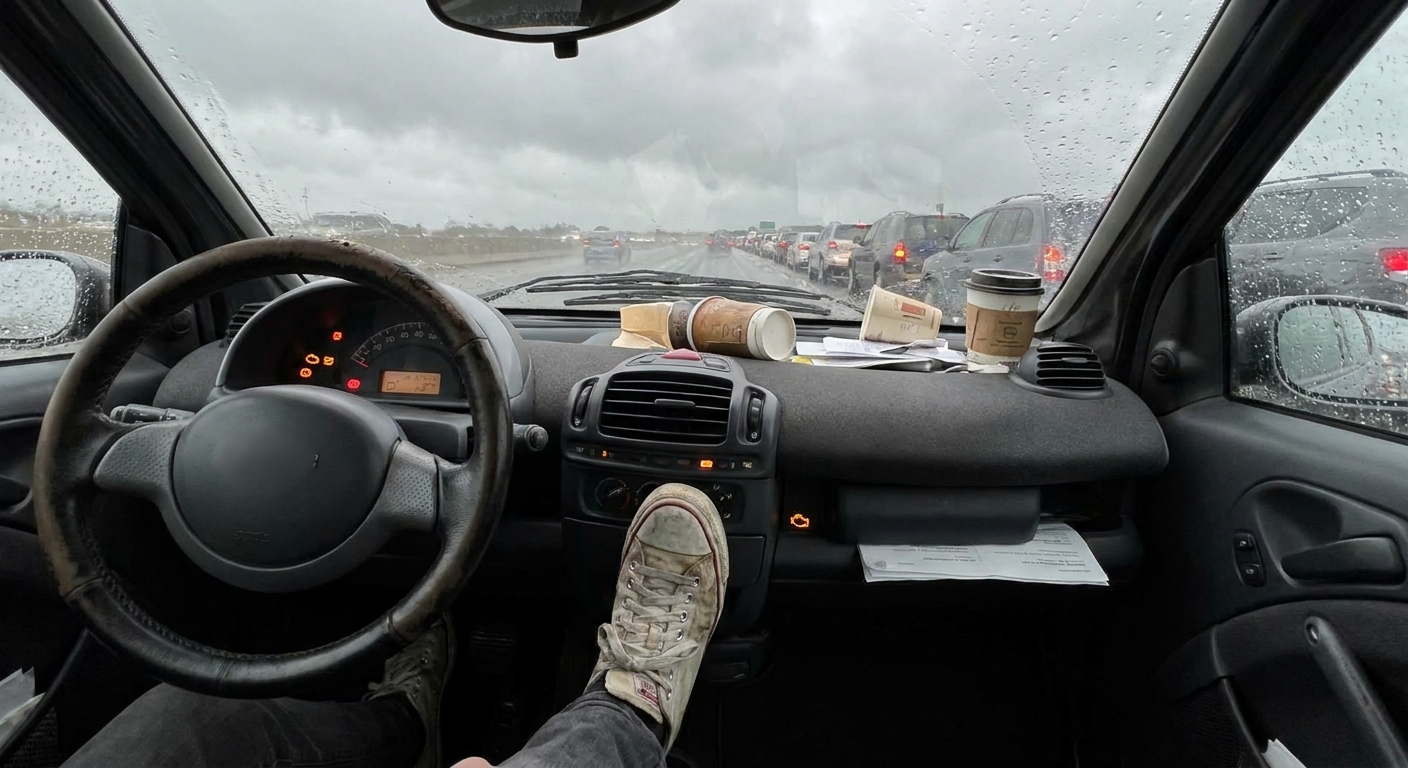
Not every breakdown is bad luck or “cheap parts.” A surprising number of car problems come from everyday habits most drivers don’t even think about.
Your Car Problems Might Be More About Habits Than Bad Luck
You don’t have to baby your car, but understanding what quietly wears it out helps you decide where to be careful and where it doesn’t matter. Here are five real-world habits that slowly kill reliability—and what to do instead.
1. Hammering the Gas on a Cold Engine
If you start the car and immediately floor it onto the main road, you’re not giving the engine a fair shot.
Why it’s a problem
When the engine is cold:
- Oil is thicker and hasn’t fully circulated yet.
- Metal parts haven’t expanded to their ideal operating clearances.
- Higher loads mean more friction and wear.
You won’t notice it today or tomorrow, but over tens of thousands of miles, aggressive driving on a cold engine adds up.
Better habit
- Start the car and drive off gently within 30–60 seconds; idling for long periods is unnecessary.
- Keep revs modest (no hard accelerations) for the first 5–10 minutes of driving, especially in cold weather.
- Avoid towing or full-throttle blasts until the temperature gauge has reached its normal range.
You’re not babying the car—you’re just letting it get to work at its own pace.
2. Ignoring Small Noises Until They Become Big Bills
Most major failures have early warning sounds. We just drown them out with music or hope they go away.
Sounds worth paying attention to
- Rhythmic thumping that speeds up with the car: could be a tire issue or something in the wheel.
- Grinding or scraping when braking: brake pads likely worn down; ignore it and you’ll need rotors too.
- Clunking over bumps: could be suspension components wearing out.
- High-pitched squeal from under the hood: belt or pulley issue.
No, you don’t have to panic at every noise. But if something new appears and sticks around more than a few days, it’s worth an inspection.
Better habit
- Do a radio-off drive once in a while—windows up and down—to listen for changes.
- When you notice a noise, note when it happens: only on turns, only on braking, only at certain speeds. That info helps a mechanic pinpoint it faster.
- Address brake and tire noises sooner rather than later; they’re both safety and wallet issues.
3. Riding the Brakes Instead of Using the Gears and Distance
Some drivers treat the brake pedal as their main speed control. It works—until brakes overheat and suspension parts wear faster.
What it does to your car
- Constant light braking generates heat, which can warp rotors over time.
- Follows-too-close + last-second braking = faster pad wear and more strain on ABS.
- Down long hills, riding the brakes can literally cook them.
Better habit
- Look farther ahead in traffic so you can ease off the gas earlier instead of braking hard.
- On long descents, use a lower gear (even in automatics, using "L", "2", or "3" if equipped) to help hold speed.
- Keep a reasonable following distance; it’s easier on your brakes and your nerves.
You’re not trying to never use the brakes—just avoid using them as the only tool in your speed-control toolbox.
4. Treating Warning Lights as Decoration
A dashboard warning light is your car’s way of talking to you. Some are urgent, some are informational, but none exist just for fun.
Lights you should never ignore
- Oil pressure light (usually an oil can symbol): stop safely ASAP. Low oil pressure can wreck an engine in minutes.
- Temperature/overheat light: continuing to drive risks severe engine damage.
- Battery/charging system light: you might have 10–30 minutes of drive time before the car dies.
The check engine light is more nuanced:
- Solid light: usually drivable but should be checked soon. Anything from a gas cap to a sensor.
- Flashing light: misfire severe enough to damage the catalytic converter—reduce load and get it checked immediately.
Better habit
- When a light comes on, don’t panic—identify it. Your manual has a chart; it’s worth five minutes to skim that section now rather than during a breakdown.
- Many parts stores will scan basic check engine codes for free; use that as a starting point, not a full diagnosis.
- If in doubt, call a trusted shop, describe the light and how the car feels, and ask if it’s safe to drive.
Knowing which lights mean “finish your errands” and which mean “pull over now” is a big part of reliable ownership.
5. Letting Maintenance Slide Until the Car “Acts Up”
This is probably the most common habit: waiting until something feels wrong before thinking about maintenance.
Why reactive maintenance costs more
- Worn brake pads + time = damaged rotors.
- Old coolant + time = corrosion in the radiator and heater core.
- Neglected transmission fluid + time = harsh shifts and expensive rebuilds.
By the time a part makes noise or fails, the damage is often already done.
Better habit
- Use your owner’s manual maintenance schedule as the baseline. It’s not perfect, but it’s far better than guessing.
- Focus on a few key intervals:
- Oil and filter
- Coolant changes
- Transmission service (if recommended)
- Brake inspections
- Spark plugs and timing components (if applicable)
- If the manual says “every 60,000 miles,” aim for somewhere close, not years late.
The goal isn’t to over-service your car; it’s to avoid waiting so long that every job becomes an emergency.
How to Break Bad Car Habits Without Becoming Obsessed
You don’t need to drive like you’re on a driving-test loop. Pick a few simple changes that give the biggest payoff:
- Be gentle for the first few minutes after startup, especially in winter.
- Listen for new noises once in a while instead of masking everything with music.
- Respond to warning lights with curiosity, not fear or denial.
- Schedule maintenance a bit early instead of way late.
These habits aren’t about being perfect—they’re about stacking the odds in your favor so your car stays reliable longer.
Over time, these changes become automatic, and breakdowns feel a lot less like bad luck and a lot more like rare exceptions.