
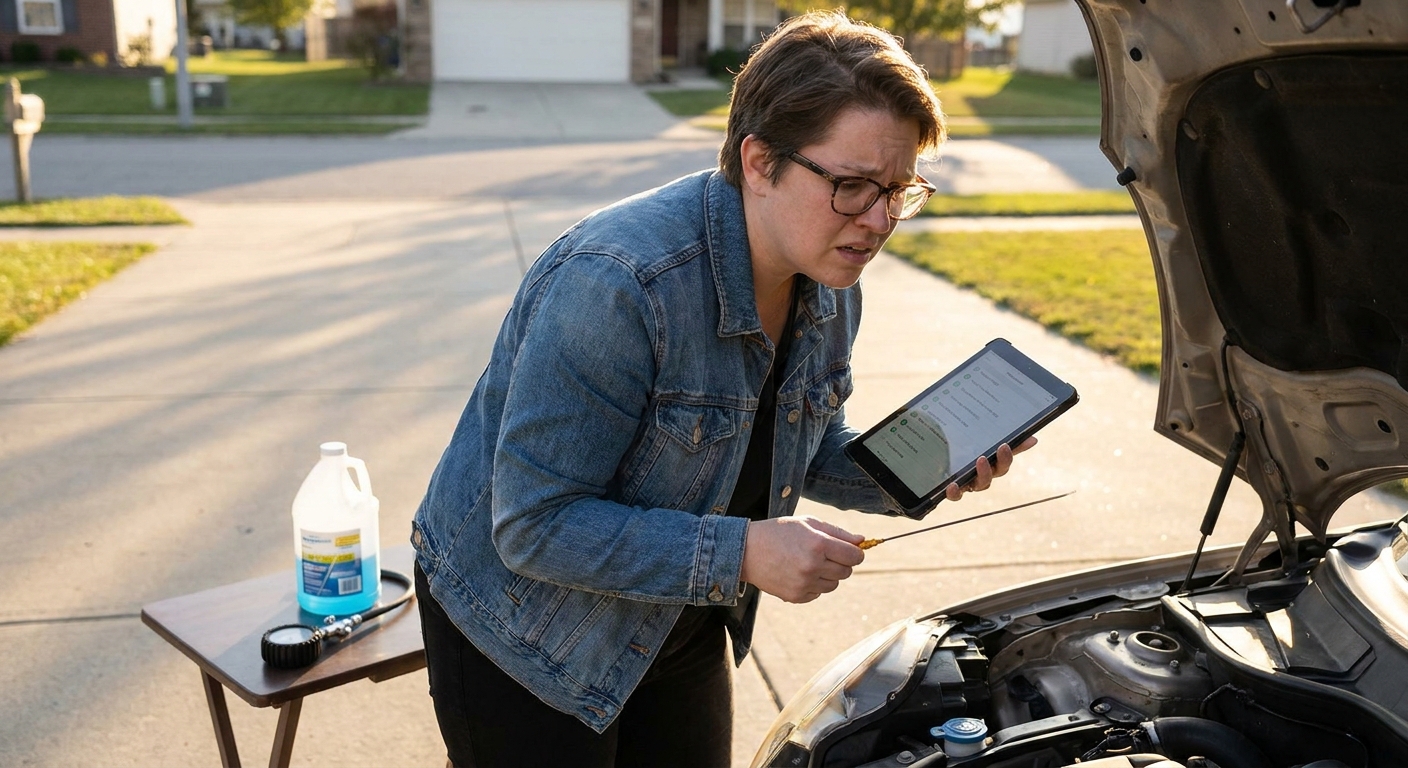
Plenty of people love driving but feel lost the moment the hood pops open. That’s normal. Modern cars are complex, but basic maintenance is still surprisingly simple—and doing a few fundamentals yourself can save money, time, and headaches.
You Don’t Need to Be a "Car Person" to Maintain Your Car
This guide walks you through five beginner‑friendly maintenance tasks. No special skills, no fancy tools, and no pressure. Just practical steps you can follow in your driveway or parking space.
1. How to Check and Top Off Your Engine Oil
Oil is your engine’s life support. Running low or letting it degrade too long is one of the fastest ways to shorten engine life.
What you need
- Paper towel or rag
- Owner’s manual (or a quick online PDF of it)
Step-by-step
- Park on level ground and turn off the engine. Wait 3–5 minutes.
- Pop the hood and find the dipstick (usually a colored handle).
- Pull it out, wipe it clean, reinsert fully, then pull it back out.
- Look at the oil level—it should sit between the MIN and MAX marks.
- Check the color: honey to light brown is normal; thick, pitch‑black, or gritty isn’t great.
- If it’s low, add oil slowly through the oil cap (not the dipstick tube) using the grade recommended in your manual.
Practical tips
- Add oil in small amounts (1/4 quart at a time), checking the dipstick between additions.
- If you’re regularly adding more than 1 quart between oil changes, have a shop check for leaks or burning oil.
2. Checking Tire Pressure and Tread Without Overthinking It
Proper tire care improves safety, fuel economy, and how your car feels on the road.
What you need
- A digital or analog tire pressure gauge
- Access to an air pump (gas station or small compressor)
Step-by-step: tire pressure
- Look for the tire pressure label on your driver’s door jamb. That’s your target PSI.
- Remove the valve cap from the tire.
- Press the gauge onto the valve and read the pressure.
- Add or release air until you’re within 1–2 PSI of the recommended number.
- Repeat for all four tires (and the spare, if you have one).
Quick tread check
- Use the penny test: insert a penny into the tread with Lincoln’s head upside down. If you can see the top of his head, it’s time to replace the tire.
- Uneven wear (more worn on one side) usually means it’s time for an alignment.
Routine: check tire pressure once a month and before any long trip.
3. Replace Your Engine Air Filter in Under 10 Minutes
Your engine air filter is like your car’s lungs. A clogged filter makes the engine work harder and can hurt fuel economy.
What you need
- New air filter (match by year/make/model or part number)
- Maybe a screwdriver, depending on your air box
Step-by-step
- Open the hood and find the air filter box—usually a black plastic box connected to a large intake tube.
- Release clips or remove a few screws to open the box.
- Lift out the old filter and note how it sits (direction matters).
- Drop in the new filter the same way, with the seal edges lined up.
- Close the lid, ensuring clips or screws are fully engaged.
When to replace
- Typically every 15,000–30,000 miles, but check sooner if you drive in dusty areas.
- If you tap the filter and a cloud of dust comes off or the pleats are dark and clogged, it’s ready to go.
4. Wiper Blades and Washer Fluid: Don’t Wait for the First Storm
You only notice bad wipers when it’s already raining. By then, it’s too late to see properly.
Replacing wiper blades
What you need:
- New wiper blades matched to your car (length and connection type)
Step-by-step:
- Lift the wiper arm off the windshield.
- Press the small tab or lever at the joint and slide the old blade off.
- Attach the new blade following the included diagram—usually it just clicks in.
- Gently lower the wiper arm back down.
Signs your wipers are done:
- Streaks or missed areas on the glass
- Chattering or skipping
- Cracked or peeling rubber
Most blades need replacing every 6–12 months, depending on climate.
Topping up washer fluid
- Open the hood and find the reservoir with a windshield/water symbol on the cap.
- Pour in washer fluid until near the top; don’t use just water in freezing climates.
- Test the sprayers and aim if necessary (some can be carefully adjusted with a small tool).
Good visibility is one of the most underrated safety features you control yourself.
5. Create a Simple Maintenance Schedule That Fits Your Life
It’s easy to feel overwhelmed by "do this every X miles" advice. Instead, build a realistic routine that you’ll actually follow.
Start with these anchors
- Oil changes: usually every 5,000–7,500 miles for modern cars using synthetic, but follow your manual.
- Tire rotation: every 5,000–8,000 miles to even out wear.
- Brake inspection: at least once a year or every other oil change.
- Fluids check: quick look monthly—oil, coolant, washer fluid, brake fluid.
Make it hard to forget
- Use a note in your phone with dates and mileage of your last services.
- Set calendar reminders for 6 months out: “Check air filter + wipers.”
- Keep receipts or digital invoices in a single folder.
Having some sort of record helps you avoid double-paying for services and makes your car more attractive to the next owner.
When to DIY and When to Call a Pro
DIY is great for checks and simple replacements:
- Oil level checks, but not necessarily oil changes if you’re not comfortable.
- Filters, wipers, washer fluid, tire pressure, and visual inspections.
Call a trusted shop for:
- Brakes, steering, suspension, and anything involving lifting the car.
- Check-engine lights that stay on.
- Fluid leaks, overheating, or strange noises you can’t easily trace.
You don’t get bonus points for doing everything yourself. The real win is understanding your car well enough to know what’s normal, what’s new, and what needs attention.
The Payoff: Confidence, Not Just Savings
Basic car maintenance isn’t about turning you into a mechanic overnight. It’s about:
- Avoiding obvious, expensive failures.
- Feeling more confident on long drives.
- Getting more honest conversations with repair shops because you know the basics.
If you start with these five tasks, you’ll already be ahead of most drivers on the road. Add one new skill at a time, stay consistent, and your car—and your wallet—will thank you over the long run.