
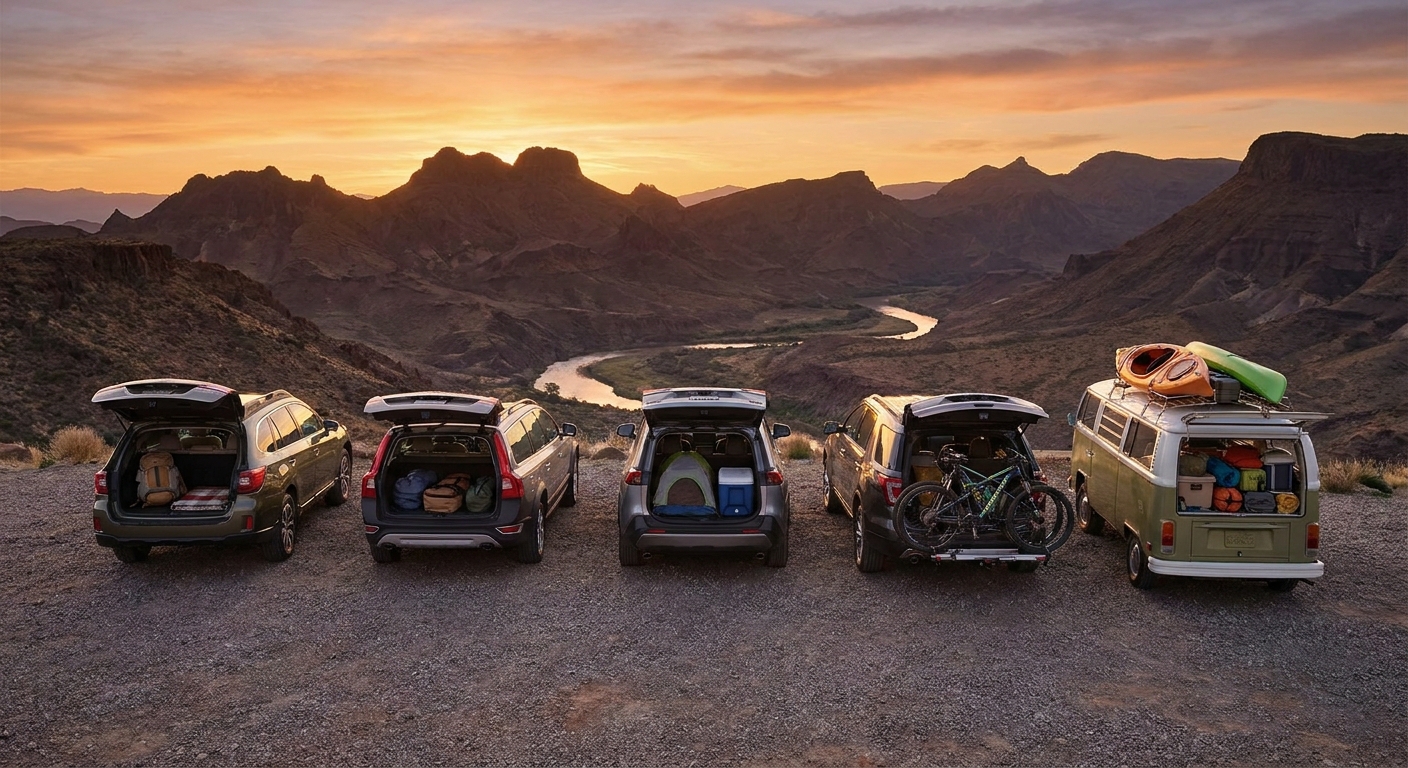
Not every driver wants the same kind of road trip. A car enthusiast with a hot hatch doesn’t pack or plan like a family in a crossover, and neither of them travels like a minimalist in a compact sedan.
One Size Does Not Fit All in Road Trip Setup
Instead of a generic checklist, this article walks through five distinct road trip setups, each matched to a different driving style and type of car. You’ll find concrete advice on what to prioritize, what to skip, and how to make the most of what you’re driving.
1. The Minimalist Commuter Setup
Best for: Solo drivers or couples in compact cars or older sedans who want low fuss and low cost.
Core Idea: Bring less, think ahead, and use what your car already offers.
Key Priorities:
Seat Comfort on a Budget
Your daily driver’s seat is tuned for short trips, not multi‑hour stints. - Add a thin lumbar cushion or folded towel to support your lower back. - Adjust the seat so your hips are slightly higher than your knees; it reduces fatigue.
Compact Storage Strategy
You don’t have much room, so organize tightly: - One small duffel per person, kept in the trunk. - One front-seat bag for essentials: snacks, documents, chargers, sunglasses. - Use seat-back pockets for maps, wipes, and tissues.
Power and Connectivity
Older cars often have limited ports: - Use a dual- or quad‑USB adapter in the 12V socket. - Download offline maps and playlists before you leave to avoid signal woes.
Lean Emergency Kit
Space is tight; go for multi‑use items: - Compact jump pack instead of long cables. - Tire plug kit + mini inflator instead of bulky tools. - Combined first‑aid + general supplies pouch.
Driving Style: Smooth and Steady
With less power and space: - Avoid aggressive passing and high-speed sprints; they’re tiring and rarely save much time. - Set realistic daily distances—your comfort, not your engine, is the limiting factor.
2. The Family Cruiser Configuration
Best for: Families or groups in crossovers, minivans, or 3‑row SUVs.
Core Idea: Keep the cabin peaceful and predictable so everyone arrives sane.
Key Priorities:
Zone-Based Packing
Assign each area of the vehicle a job: - Trunk: big bags, cooler, bulk items. - Third row (if folded): stroller, sports gear, or bulky but light items. - Second row: individual tote or backpack per passenger.
Back-Seat Comfort Kit
Happy passengers equal calmer drivers: - Small blankets, neck pillows, and noise‑isolating headphones. - A shared "entertainment bin": books, cards, simple games.
Snack and Trash Management
Food chaos can ruin the cabin quickly: - Use a small soft cooler for drinks and perishable snacks; restock from larger supplies in the trunk. - Hang a trash bag behind a seat and empty it at every major stop.
Routine Stops and Roles
Build structure into the day: - Plan stops around 2–2.5 hour intervals. - Assign roles: one adult handles fueling and car checks; another handles snacks and kids.
Driving Style: Calm and Predictable
With precious cargo: - Focus on smooth acceleration and braking; kids feel sudden changes more than adults. - Use adaptive cruise and lane keeping when available—but treat them as helpers, not replacements.
3. The Enthusiast’s Scenic Route Setup
Best for: Drivers in hot hatches, sports sedans, coupes, or well‑sorted older cars who enjoy the road as much as the destination.
Core Idea: Maximize driving enjoyment while staying safe and reasonably comfortable.
Key Priorities:
Mechanical Readiness Beyond the Basics
Enthusiastic driving puts extra stress on components: - Check brake pad thickness; you want comfortable margin on mountain passes. - Inspect tires for uneven wear—spirited drives on marginal rubber are a bad combo. - Confirm alignment if you’ve noticed any pulling or wheel shake.
Route Curation, Not Just Directions
Don’t let the nav app pick every mile: - Research known driver’s roads, mountain passes, and scenic byways. - Use major highways primarily to connect good driving segments.
Pack Light but Purposeful
Weight and balance matter more here: - Minimize roof loads; they hurt handling. - Pack heavier tools and spares low and near the center of the car.
Driving Style: Fun with Margin
Enthusiast doesn’t mean reckless: - Start conservatively on unfamiliar roads; build pace as you learn sightlines and surface quality. - Be extra cautious on tourist routes—you’ll share them with distracted drivers and unpredictable stops.
Cool-Down and Check-Down
After spirited sections: - Let the car cruise gently to cool brakes and drivetrain. - At scenic overlooks, use the stop to check oil, tire condition, and any smells or noises.
4. The Weekend Adventure / Sport Setup
Best for: Drivers hauling bikes, kayaks, camping gear, or sports equipment in wagons, SUVs, or trucks.
Core Idea: Balance gear capacity with vehicle stability and drivability.
Key Priorities:
Secure Gear Like It Will Be Tested (Because It Will)
Emergency braking and crosswinds are non‑negotiable realities: - Use ratchet straps, not just bungees, for heavy loads. - Secure anything inside the cabin that could become a projectile.
Weight and Suspension Awareness
Extra weight changes handling: - If rear sag is obvious, consider air helper springs or weight distribution adjustments long‑term. - Increase following distances; heavy rigs don’t stop like empty ones.
Roof Racks and Aerodynamics
Roof gear affects noise and fuel economy: - Position bikes or boxes as centered and low as possible. - Check all mounting points at each major stop—especially with kayaks or canoes.
Road-to-Trail Transition Kit
You’ll likely switch from pavement to gravel or dirt: - Keep a small brush or towel for cleaning lights and plates. - Bring basic off‑pavement tools: small shovel, traction boards if conditions warrant.
Driving Style: Anticipate, Don’t React
Extra mass and height demand: - Smoother steering inputs and earlier braking. - Extra caution with crosswinds, especially when passing or being passed by large trucks.
5. The Budget Road Tripper Configuration
Best for: Drivers in older or high‑mileage vehicles, students, or anyone stretching every dollar.
Core Idea: Spend where it matters (safety and reliability) and save on the rest.
Key Priorities:
Pre‑Trip Inspection: Spend a Little, Save a Lot
A modest shop visit can prevent major breakdowns: - Ask for a road trip inspection focusing on belts, hoses, brakes, and tires. - Replace borderline items before they fail at highway speeds far from home.
Fuel and Food Strategy for Savings
- Use apps to find cheaper stations a little off major interchanges. - Pack a basic food crate: shelf‑stable items to reduce impulse fast food.
Simple Sleep Solutions
If you might sleep in the car occasionally: - Bring a compact sleeping pad and light blanket. - Park only in safe, legal locations: truck stops, some 24‑hour lots, or designated rest areas where allowed.
DIY Comfort Upgrades
Low-cost improvements can make an old cabin feel new: - Seat covers or cushions for worn upholstery. - Cheap but effective phone mount and charger setup to modernize an older dash.
Driving Style: Gentle Preserves the Car
Older vehicles reward smoothness: - Avoid hard launches and panic trips to redline. - Descend long hills in a lower gear to protect brakes. - Keep cruise speeds modest; you’ll save both fuel and mechanical stress.
Final Thoughts
There’s no single "correct" way to set up a road trip. The right approach depends on your car, your passengers, and what you want from the drive. By matching your setup to your driving style—minimalist, family, enthusiast, adventure, or budget—you’ll get more enjoyment from both the journey and the machine that’s taking you there.