
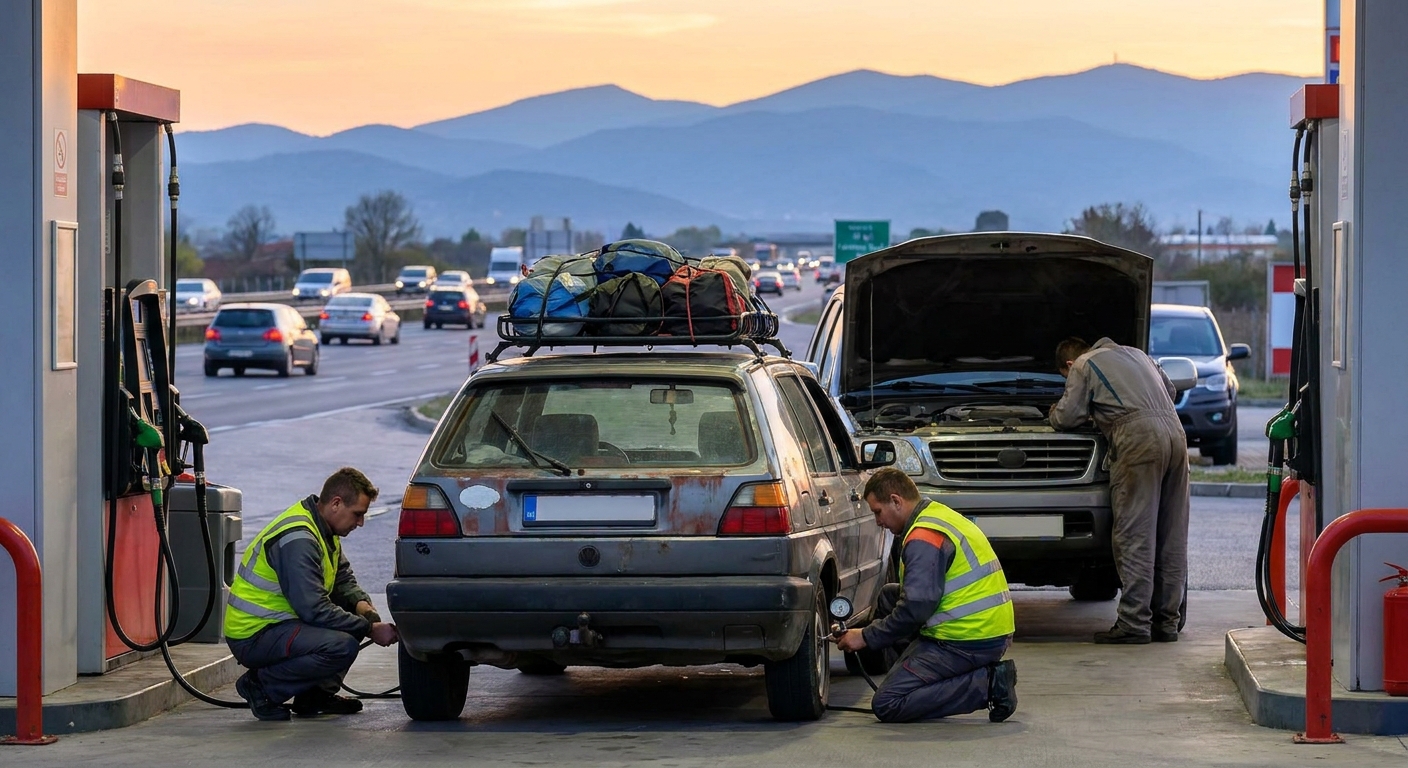
You don’t need a brand-new SUV or a purpose-built overlander to take on a solid road trip. Most modern cars—compact hatchbacks, family sedans, even older trucks—can cover serious distance reliably when they’re prepared with a bit of intention.
Turning Your Regular Car into a Road-Ready Machine
Think of this as a practical blueprint: five focused areas that transform your daily driver into a distance eater, without spending a fortune or wrenching all weekend.
1. Start With the “Rule of 500”: Is Your Car Road-Trip Ready at All?
Before spending a cent on extras, ask a simple question:
“Would I be comfortable driving this car 500 miles tomorrow?”
If the answer is anything other than yes, fix the hesitation first.
Check how your car behaves now, not in theory:
Take your car on a 20–30 minute mixed drive:
- Brakes: Any pulling to one side, vibration in the steering wheel under braking, or grinding noises? Those don’t magically get better with distance.
- Steering and suspension: Does it track straight on a flat road? Excess wander or bounce over bumps can turn a long day into a tiring wrestling match.
- Engine behavior: Hesitation under acceleration, rough idle, or warning lights are all red flags. If a light is already on, scan it before the trip, not after it strands you.
If something feels “off,” address that before you worry about accessories or gadgets.
2. Knock Out the Big Three: Tires, Fluids, Visibility
Once the basics feel solid, focus on the three systems that matter most on a long drive.
Tires: ride, grip, and peace of mind
Tires are where everything starts.
- Age: Even if tread looks okay, tires older than ~6 years get harder and less predictable. The DOT date is stamped on the sidewall (a four-digit code like 2419 = 24th week of 2019).
- Tread: Deep grooves matter in the wet. If you’re close to the wear bars, consider replacing before the trip, especially in rainy seasons.
- Pressure: Set cold pressures to the door jamb sticker, not the max rating listed on the tire. Re-check after loading the car fully.
If you’re on mismatched or borderline tires and planning a long trip, this is the one upgrade that changes everything: comfort, safety, and fuel economy.
Fluids: small investments, big insurance
At minimum, check and top off:
- Engine oil: Verify level and color. If your next oil change is due within 1,000 miles of your trip, just do it now.
- Coolant: Correct level in the reservoir, no rusty sludge or oil-like film. Overheating on a trip is a major day-ender.
- Brake fluid: It should be clear to light amber, not dark brown. If it’s old, consider a flush, especially in hilly or mountain regions.
- Windshield washer fluid: Cheap and essential for bug-heavy or dusty stretches.
Visibility: seeing and being seen
- Wipers: If they streak or chatter during a normal rain, replace them. It’s a 5-minute job you’ll thank yourself for.
- Headlights and brake lights: Check all bulbs. Cloudy headlight lenses can often be improved with a quick restoration kit.
These simple checks stack together into a car that feels solid, predictable, and less tiring to drive for hours.
3. Upgrade Comfort Where It Matters Most
When you’re in the car all day, the biggest difference between “endurable” and “enjoyable” comes from small comfort upgrades.
Support your body, not just the seat
- Seat position: You should be able to rest your wrists on the top of the wheel with a slight bend in your elbows and press the pedals without locking your knees.
- Lumbar support: If your seat lacks good lumbar support, a simple lumbar cushion or rolled towel can change how your back feels after 300 miles.
- Neck and shoulder relief: Tilt the headrest so the back of your head, not your neck, touches lightly.
Reduce noise and chaos in the cabin
- A basic sunshade and tinted windows (where legal) keep heat down, making the AC’s job easier.
- Use organizational pockets or a small bin in the rear seat for kids’ stuff, cords, and snacks.
- Introduce quiet periods in your audio routine. Constant noise, even music, adds to fatigue over time.
You don’t need a luxury interior; you need a reset-friendly one.
4. Add Smart Gear, Skip the Gimmicks
There’s endless gadgetry aimed at road-trippers. Focus on items that solve real problems you might encounter.
Essentials that punch above their weight
- Portable jump starter: Works even when there’s no one around to give you a jump. Many include USB ports and a flashlight.
- Tire repair kit + 12V inflator: A plug kit can handle many punctures without waiting for a tow.
- OBD2 scanner (or app with a dongle): Lets you read basic engine codes. Helps you decide if a warning light is “finish the day then fix” or “stop now.”
Simple comfort and safety gear
- Compact first-aid kit: Add your own pain relievers, motion-sickness tablets, and any personal medications.
- Emergency lighting: A small headlamp or bright LED flashlight makes nighttime issues far less stressful.
- Power management: Quality USB chargers for every row of seats and at least one longer cable.
Skip crowded cupholder gadgets and novelty gear. If it doesn’t clearly answer a “what if…?” you’ve actually worried about, you probably don’t need it.
5. Tune Your Plan to Your Car’s Personality
Every car has a personality: its sweet spot for cruising speed, fuel economy, and comfort. Build your trip around how your car naturally likes to run.
Match speed and route to your machine
- Older vehicles and smaller engines: They often feel best at a slightly lower cruising speed (say 60–70 mph vs. 75–80). You’ll arrive less tired, with the engine and cooling system less stressed.
- Performance-oriented cars: Great on smooth, sweeping highways but more demanding on rough surfaces. Plan routes that play to their strengths and remember high-performance tires can be more vulnerable to damage on bad roads.
Fuel range and stops
- If your car has a short tank range, factor in more frequent stops and think about routing through towns instead of long, empty stretches.
- If you’re heavily loaded or towing, never assume your usual range still applies. Watch the gauge more closely on the first leg.
Listen for new noises early in the trip
The first day is your shakedown cruise:
- Pay attention to new hums, vibrations, or smells.
- If something seems off, address it while you’re still near larger towns or cities rather than pushing deeper into remote areas.
Your trip will feel smoother if you treat the car like a teammate with strengths and limits, not just a tool.
The Payoff: Confidence Over Miles
You don’t need exotic hardware to turn your commuter into a distance eater. What you need is:
- An honest check of its current condition.
- Fresh tires, healthy fluids, and clear visibility.
- A cabin that respects your body over many hours.
- A small kit of smart, problem-solving tools.
- A route and pace that match your car’s abilities.
Invest a weekend afternoon before your trip, and the car that takes you to work every day can just as easily take you across the state—or the country—with confidence.