
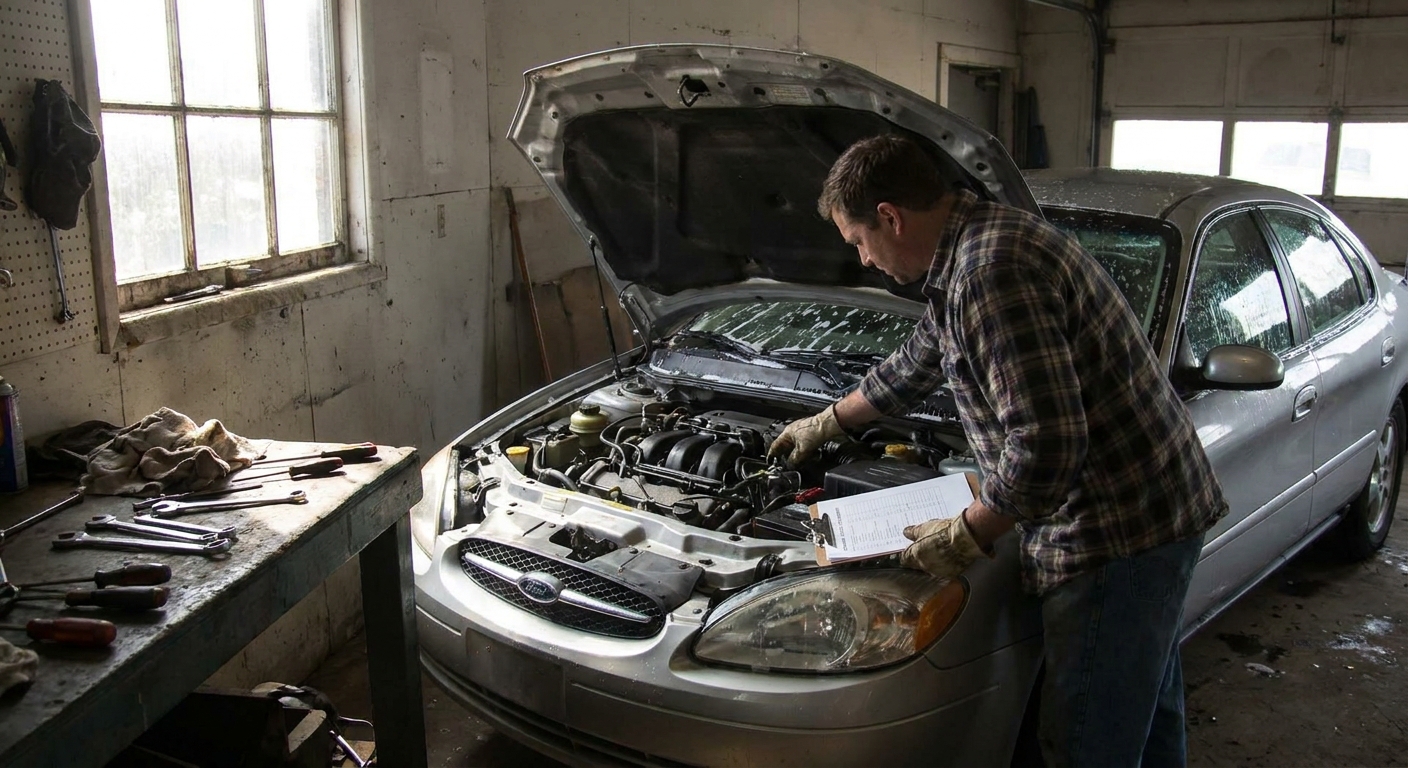
Maybe the oil change sticker is two months overdue, your tires look a little tired, and there’s a faint rattle you’ve learned to ignore. You’re not alone—most cars on the road are running behind on basic maintenance.
Introduction
Instead of feeling guilty or overwhelmed, treat car care like a reset project. In five focused weekend sessions, you can take a neglected daily driver and turn it into something you actually trust on a road trip.
This guide breaks the reset into five practical stages, each with concrete actions and experience-based shortcuts.
Session 1: Fluids First – The Lifeblood Check
Neglected cars almost always have neglected fluids. Start here, because fluids are cheap and engines are not.
Key Fluids to Inspect or Replace
Engine oil and filter
- If you don’t know when it was last changed, change it now. - Use the correct viscosity from your owner’s manual, not just what’s on sale. - Pro tip: If the oil looks like thick tar or there’s heavy sludge under the cap, do short-interval changes (e.g., every 3,000–5,000 km) for the next few services to gently clean things up.
Coolant/antifreeze
- Check level in the reservoir (engine cold). - Look at the color: bright and transparent is good; brown or milky is bad. - If age is unknown, do a full coolant flush, not just a top‑off.
Brake fluid
- Brake fluid absorbs moisture over time. Old fluid can cause a soft pedal and corroded internal components. - If it’s more than 2–3 years old (or you don’t know), have it flushed and replaced.
Transmission fluid
- Automatics: Dark brown with a burnt smell needs attention; bright red is healthy. - Manuals: Usually changed less often, but fresh gear oil can transform shift quality. - If high mileage and never changed, consult a trusted mechanic. Sometimes a gradual service (partial drain and fill) is better than an aggressive flush.
Power steering and differential fluids (if applicable)
- Often forgotten but important for long-term reliability.
Why Fluids Come First
Getting fluids sorted stabilizes the car’s core systems. It’s like giving the engine and drivetrain a health reset—essential before pushing it hard or taking long trips.
Session 2: Tires, Brakes, and Basic Safety
Once the fluids are handled, turn to what keeps you on the road and able to stop.
Tires: Your Only Contact Patch
Check tread depth and age
- Use a coin or tread gauge; anything near the legal limit should be replaced. - Check the DOT date code on the sidewall. Over 6–8 years old? Consider new tires even if tread looks fine—rubber ages.
Set correct tire pressure
- Use the pressure listed on the driver’s door jamb, not the sidewall. - Check pressure monthly and before long trips.
Look for uneven wear
- Feathers, cupping, or heavy edge wear point to alignment or suspension issues.
Brakes: Confidence Under Your Right Foot
Visual check through the wheel (where possible)
- Look for pad thickness: you generally want at least 3–4 mm of material. - Deep grooves in the rotor = time for replacement.
Road test at moderate speed
- Smooth stops, no pulling to one side, no grinding. - If you feel vibration under braking, rotors may be warped or have uneven pad deposits.
Handbrake / parking brake
- Should hold the car on a gentle incline.
Safety Essentials Checklist
- All lights working: headlights, brake lights, indicators, reverse lights.
- Wipers clean the glass without streaking; replace if they chatter or smear.
- Horn works clearly.
This session gives you the confidence that the car will go, turn, and stop safely—non‑negotiable before you worry about anything cosmetic.
Session 3: Battery, Belts, and the “Won’t Start” Prevention Plan
Nothing ruins a day like a no‑start situation in a parking lot.
Battery Health
Check the age
- Look for a date code on the case. Over 4–5 years? Consider pre‑emptive replacement if you live in very hot or very cold climates.
Terminals and cables
- Remove any white/green corrosion with a proper battery terminal cleaner or a baking soda solution. - Ensure clamps are tight; loose terminals cause intermittent electrical issues.
Charging system
- Many parts stores will test your battery and alternator for free.
Belts and Hoses
Serpentine/accessory belts
- Look for cracks, fraying, or glazing (shiny surfaces). - A failed belt can take out your alternator, power steering, or water pump.
Radiator and heater hoses
- Squeeze gently when cool; they should feel firm but not rock‑hard. - Bulges, soft spots, or obvious cracks mean it’s time to replace.
Your Personal No‑Start Kit
Keep these in the car:
- Quality jumper cables (thick gauge, decent length)
- Basic flashlight
- Gloves and a small towel
These items turn a major hassle into a quick favor from a nearby good Samaritan—or vice versa.
Session 4: Cabin, Filters, and The Daily-Use Experience
Now that the car is mechanically more trustworthy, improve the place where you actually spend time: the cabin.
Air Filters: Small Parts, Big Difference
Engine air filter
- A clogged filter chokes performance and wastes fuel. - Hold it up to a light; if you can’t see light through most of it, replace.
Cabin air filter
- Often behind the glovebox; catches dust, pollen, and debris. - A fresh filter improves HVAC performance and reduces fogging.
Interior Reset
Declutter
- Remove unnecessary junk from the trunk and cabin—weight hurts fuel economy and rattles add noise.
Vacuum and wipe‑down
- Focus on touch points: steering wheel, shifter, door handles, center console.
Glass cleaning
- Clean interior glass with a proper glass cleaner and microfiber; it dramatically improves night driving visibility.
HVAC and Comfort Checks
- Make sure heat and A/C work in all modes (defrost, floor, vents).
- Listen for blower fan noises at different speeds; squeaks may indicate a failing motor.
A clean, comfortable interior makes you more likely to keep caring for the car. Pride of ownership is an underrated maintenance tool.
Session 5: Suspension, Alignment, and Long-Term Habits
With the basics handled, finish your reset by focusing on how the car rides and by setting up habits that keep it in good shape.
Suspension and Alignment
Bounce test
- Push down firmly on each corner of the car and release. The body should rebound up and settle quickly. - Multiple bounces suggest tired shocks/struts.
Road feel
- On a smooth road, the car should track straight with minimal steering correction. - On bumps, it shouldn’t crash or wallow excessively.
Alignment check
- If the steering wheel is off‑center when going straight, or the car drifts, get a professional alignment. - Do this after any major suspension or steering repairs, not before.
Build a Simple Maintenance Routine
Now that you’ve reset the car, protect that investment with easy habits:
Monthly 10‑minute check
- Tires (pressure and visual wear) - Quick fluid glance (oil, coolant reservoir, brake fluid level) - All exterior lights
Set reminders
- Use your phone for oil changes, tire rotations, and fluid intervals. - Keep a simple notebook or note app with dates and mileage of services.
Driving style as car care
- Smooth acceleration and braking reduce wear on brakes, tires, and drivetrain. - Let the engine warm up gently; don’t floor it right after a cold start.
Conclusion
You don’t need a full toolbox or a mechanic’s diploma to turn a neglected car into a dependable daily. By splitting the work into five realistic sessions—fluids, safety, starting system, cabin, and suspension/habits—you’ll end up with a car that feels tighter, runs better, and inspires more confidence every time you turn the key.
And once you experience what a properly cared‑for car feels like, it’s surprisingly easy to keep it that way.