
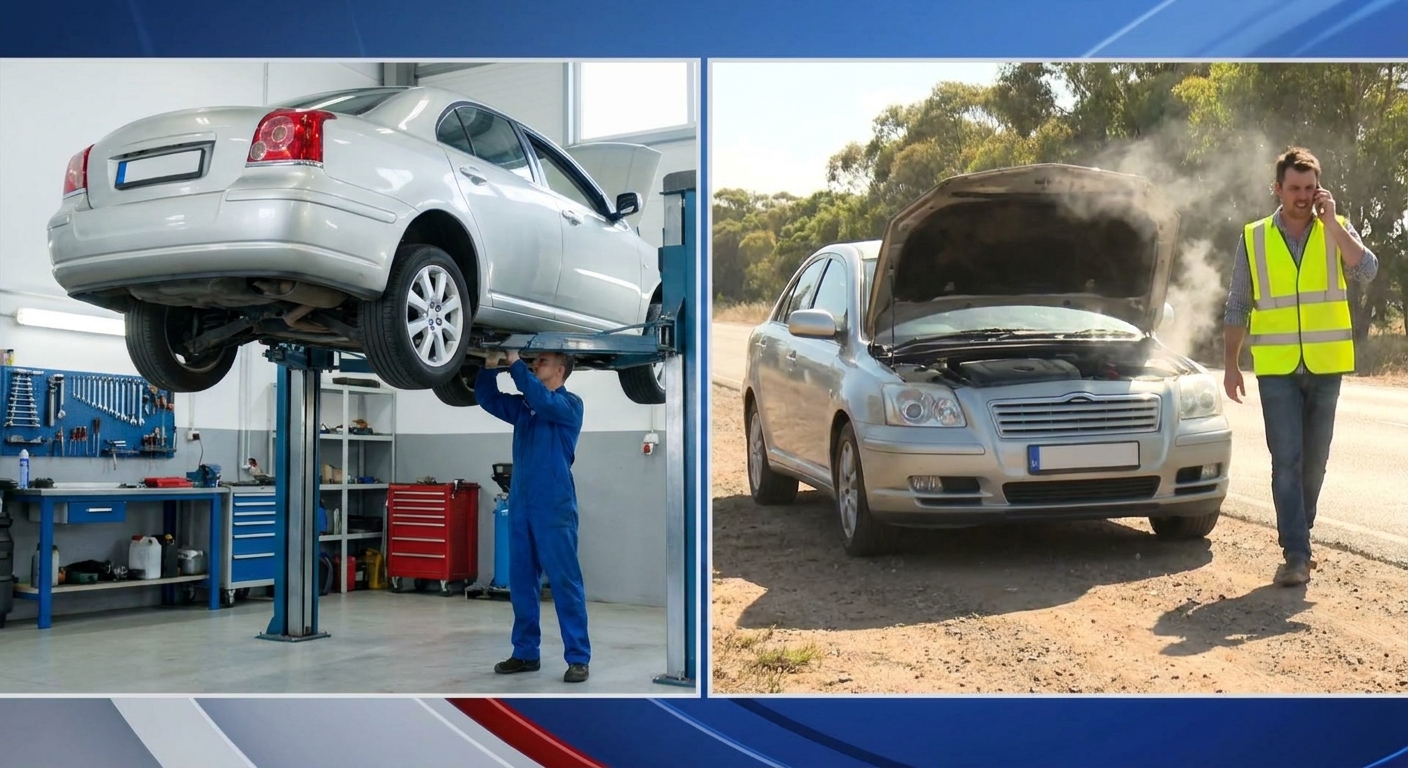
Ask any shop, and they’ll tell you: some customers are maintenance people, others are wait-until-it-breaks people. Both cars usually move down the road—at least for a while. The question is which approach actually makes more sense over time.
Maintenance vs. Repairs: Where Does the Money Really Go?
This isn’t a scare piece. Sometimes it’s rational to defer certain services. Sometimes it’s not. Let’s walk through five common maintenance areas, comparing what happens if you stay ahead of them versus waiting until something forces your hand.
1. Oil Changes: Stretching Intervals vs. Staying Conservative
Most modern cars list impressive oil change intervals—up to 10,000 miles or more with synthetic. That’s not automatically wrong, but context matters.
Preventive approach
- Change oil and filter at 5,000–7,500 miles, or at least annually, using a quality synthetic that meets your car’s spec.
- Especially smart if you do a lot of short trips, idling, towing, or spirited driving.
Outcome:
- Cleaner internals, less sludge, better protection on cold starts.
- Lower risk of timing chain tensioner wear, turbo issues (if equipped), and oil consumption problems as the car ages.
Wait-until-later approach
- Push oil changes to 10,000+ miles consistently, use bargain filters, or skip annual changes on low-mileage cars.
- Common reasoning: “The oil still looks clean,” or “The manual says up to 10k.”
Risks:
- Accelerated wear that doesn’t show up until higher mileage.
- Sludge buildup in engines that see mostly short trips.
- Potentially expensive problems that don’t look like they’re related to oil—like timing component failures.
Reality check:
If you plan to keep the car long-term or drive it hard, a slightly more conservative oil schedule is cheap insurance. If you lease and are out in 3 years, following the factory interval is usually enough.
2. Brakes: Replacing Pads on Time vs. Waiting for the Grind
Brakes are a classic “I’ll deal with it later” area—until “later” is a grinding noise and a long pedal.
Preventive approach
- Have brakes inspected at least once a year or every other oil change.
- Replace pads when there’s still a safe amount of material left, before you hit the metal wear indicators.
Outcome:
- You typically replace pads and maybe resurface rotors, which is relatively affordable.
- Shorter shop visits; less stress because it’s planned, not an emergency.
Wait-until-later approach
- Drive until you hear grinding or feel vibration, then finally schedule service.
- Ignore early squeals and chalk them up to “just dust.”
Risks:
- Pads wear down to metal, cutting into the rotors. Now you need pads + rotors, sometimes calipers too.
- Longer stopping distances as performance degrades before you notice.
- Higher chance of needing the work RIGHT NOW, not when it’s convenient.
In most cases, doing pads slightly early costs less than doing pads and rotors together because you’re not wasting the rotors you already had.
3. Coolant and Overheating: Shiny Radiator or Steamy Roadside?
Coolant is often ignored because it’s out of sight and usually lasts years. But “lifetime coolant” doesn’t mean your radiator and heater core are immortal.
Preventive approach
- Change coolant roughly every 5 years / 50,000–100,000 miles (or as listed in the maintenance schedule).
- Use the correct type and mix, bleed the system properly.
Outcome:
- Corrosion inhibitors stay fresh, reducing internal rust and buildup.
- Radiator, heater core, and water pump typically last longer.
- Lower chance of overheating due to clogged passages.
Wait-until-later approach
- Never flush coolant unless there’s a problem.
- Top up with random green stuff or water when it’s low.
- Ignore early signs of overheating (“it only does it sometimes”).
Risks:
- Clogged or corroded radiator and heater core—both frustrating and not cheap.
- Overheating that can warp cylinder heads or blow head gaskets.
- Getting stuck at the worst possible time: in traffic, towing, or far from help.
A coolant service every few years is inexpensive compared to even one overheating incident that cooks the engine.
4. Tires and Alignment: Regular Rotations vs. Driving Them Unevenly Bald
You’ll buy tires multiple times over a car’s life. How soon you have to do that is partly up to you.
Preventive approach
- Rotate tires every 5,000–8,000 miles, check pressure monthly, align when you notice pulling or after suspension work.
- Replace tires before they’re completely bald—around 3–4 mm of tread for all-season, a bit more for winter.
Outcome:
- Tires wear more evenly; you get closer to full value from a set.
- Better handling, braking, and wet-road safety throughout their life.
- Fewer surprises: tire wear becomes something you can plan for and budget around.
Wait-until-later approach
- Never rotate, only check pressure when a warning light comes on.
- Ignore pulls, vibrations, or steering wheel off-center.
- Replace only the worst tire at a time.
Risks:
- One or two tires wear out far ahead of the others, forcing mixed setups that hurt stability and traction.
- Chronic vibrations and poor ride from uneven wear.
- Higher chance of hydroplaning or blowouts when the tread is paper-thin.
Rotations and alignments aren’t just “add-ons” shops try to sell; they’re how you make expensive tires last the way they’re supposed to.
5. Transmission and Driveline: Lifetime Fluid vs. Real-World Use
“Lifetime fluid” is one of the most misleading phrases in car care. Whose lifetime—the car’s, the warranty’s, or the trans engineer’s career span?
Preventive approach
- For automatics and dual-clutch boxes, follow a reasonable service interval: often 40,000–60,000 miles if you tow, sit in heavy traffic, or keep the car long-term.
- For manuals and differentials, fresh fluid every 60,000–100,000 miles can keep things shifting smoothly.
Outcome:
- Better shift quality, less wear on solenoids, clutches, and valve bodies.
- Lower risk of heat-related breakdown in the fluid.
- Transmissions that often outlast the rest of the car.
Wait-until-later approach
- Never change trans fluid unless it fails.
- Assume “sealed” or “lifetime” means “never touch it.”
- Only address it when shifting becomes harsh or slipping.
Risks:
- By the time you feel symptoms, damage is often already done.
- Repairs or rebuilds easily run into the four-figure range.
- Fluid changes won’t reverse damage; at that point they’re just a band-aid.
Not every car needs aggressive service here, but if you plan to keep it past 100k miles, proactive fluid changes are usually cheaper than even a single major transmission repair.
So, Is Preventive Maintenance Actually Cheaper?
In the short term, deferring maintenance feels like you’re saving money. No bill today, less time at the shop, more cash in your pocket.
In the real world over several years:
- Preventive care tends to spread costs out, turning big surprises into smaller, predictable expenses.
- Reactive care often bundles costs into crisis moments—towing, missed work, rental cars, and bigger repairs.
A balanced approach works best:
- Be strict with safety items: brakes, tires, steering, cooling, oil.
- Be sensible with non-essentials: cosmetic issues, minor squeaks, optional services.
- Use your owner’s manual as a baseline, not a sales pitch or a minimum-effort target.
Preventive maintenance isn’t about doing everything early or spending blindly. It’s about understanding which corners you can cut and which ones come back with interest.
If you think of car care like you think of your own health—basic checkups, decent habits, and quick attention when something changes—you’ll spend less time on the side of the road and more time just enjoying the drive.