
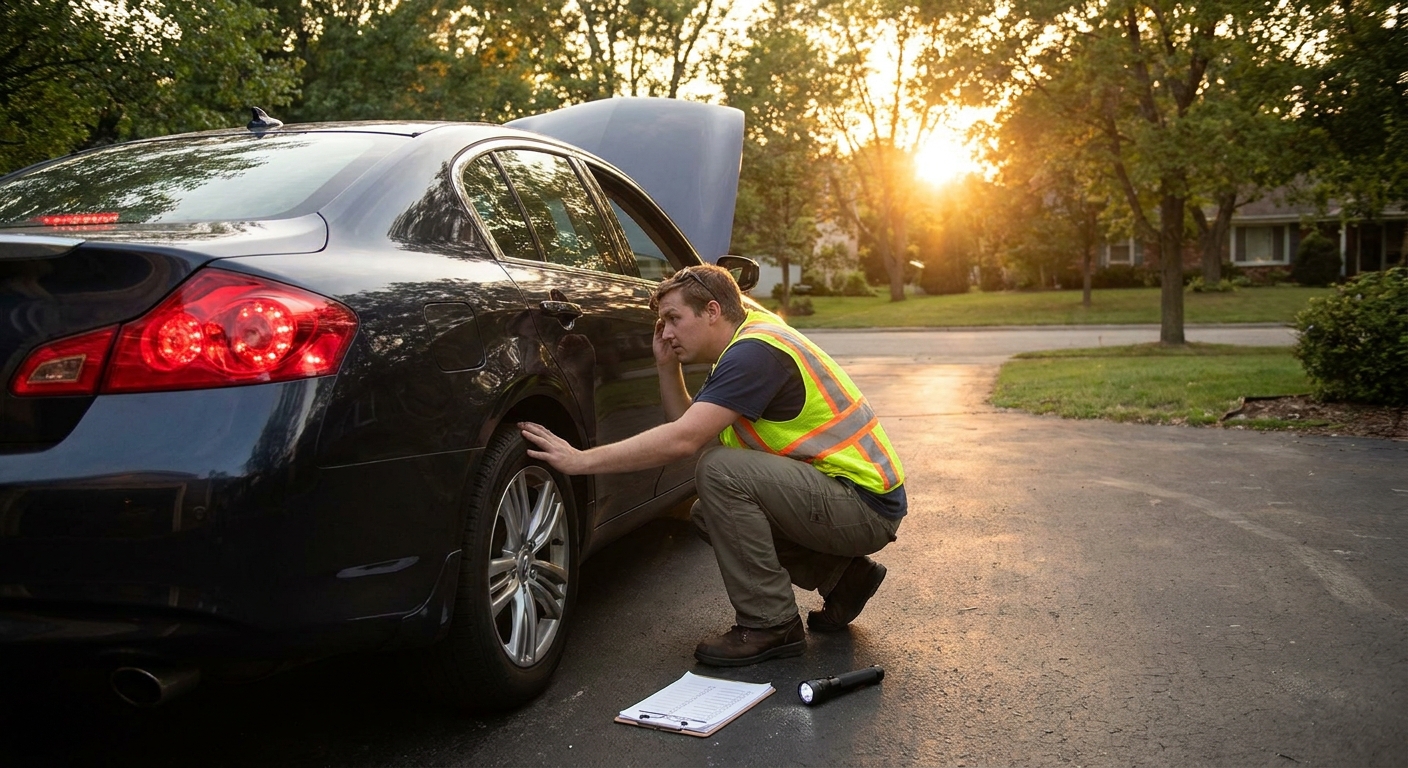
Most people think car care means expensive services and complicated tools. In reality, the best car maintenance routine is something you can do with what you already have: your five senses.
Introduction
This "5‑sense inspection" is a simple, repeatable way to catch problems early and keep your car feeling tight, safe, and reliable—whether you’re commuting daily or tinkering on weekends.
We’ll walk through how to use your sight, hearing, smell, touch, and even basic feel for performance to spot issues before they become breakdowns.
1. Sight: What Your Car Is Trying to Show You
Most problems leave visual clues long before anything fails. Build a quick visual walk‑around into your weekly routine.
A. Check the ground where you park
Take 10 seconds before you drive off:
- Fresh puddles: Clear water is usually A/C condensation. Colored or oily spots are trouble:
- Green, orange, pink: Likely coolant
- Brown/black and slick: Engine oil
- Reddish, oily: Transmission or power steering fluid
- Clear but oily: Could be brake fluid
- Growing stain over days: Don’t ignore it. Put cardboard under the car overnight to pinpoint the leak area, then show a photo to your mechanic.
B. Look at the tires, not just the tread depth
Drivers often ask, "Do I still have enough tread?" That’s only half the story.
Inspect:
- Edge wear only: Typically low tire pressure or misalignment
- Center wear only: Overinflation
- Cupping or scalloped patches: Possible worn shocks/struts or other suspension issues
- Cracks in sidewalls: Aging rubber—replace even if tread looks OK
Rotate tires on schedule, but use these patterns as clues to address alignment or suspension before you chew through another set.
C. Fluid levels and color
A quick look under the hood once a month goes a long way:
- Engine oil: Pull the dipstick, wipe, reinsert, then check:
- Level between marks
- Color: Used oil will be darker, but gritty or sludgy oil means change it
- Coolant (only check when engine is cold): Level between “MIN” and “MAX" in the reservoir; milky or rusty coolant needs attention
- Brake fluid: Slowly getting darker is normal; a sudden drop in level is not—have brakes inspected.
You don’t need to top everything off yourself, but knowing what “normal” looks like helps you spot “not normal” instantly.
2. Hearing: The Sounds That Matter (and the Ones That Don’t)
Modern cars filter out a lot of noise, which means when you do hear something new, pay attention.
A. Brakes that talk
Common sounds and what they usually mean:
- High‑pitched squeal while rolling: Many pads have wear indicators that squeal when it’s time for new pads
- Grinding when braking: Pads are probably gone and metal is contacting metal—this can quickly damage rotors
- One‑time clunk when you brake hard: Can be normal movement in the pads or suspension bushings, but if it repeats, have it inspected
Don’t wait for grinding “to see if it goes away.” It rarely does, and the repair bill only grows.
B. Rhythmic noises that change with speed
- Whup-whup-whup that speeds up with the car: Often a tire issue—bubble, flat spot, or uneven wear
- Howling or humming that increases with speed and changes when you turn: Could be a wheel bearing
If a new sound appears and you can tie it to speed (not engine RPM), suspect tires, bearings, or drivetrain.
C. Engine and accessory noises
- Belt squeal on cold start: Often a worn or loose belt; inexpensive to fix but can leave you stranded if it snaps
- Clicking that rises with RPM: Could be low oil or valvetrain issues—check oil level immediately
- Random rattles from the dash or doors: Annoying but usually harmless; many enthusiasts use felt tape or foam to quiet these down.
The key: note when the noise happens (cold/warm, braking, turning, accelerating) and share that detail with your mechanic. It often saves diagnostic time and cost.
3. Smell: Your Car’s Early-Warning System
Your nose can catch problems long before a warning light does.
A. Sweet, syrupy smell
- Usually coolant. Check for damp spots near the radiator, reservoir, or passenger footwell (heater core leaks).
- Even small coolant leaks can lead to overheating and major engine damage if ignored.
B. Burning odors
- Burnt oil: Often a minor valve cover leak dripping on a hot part; easy fix if caught early
- Burning rubber: Slipping belt or something touching the exhaust (like a plastic bag caught underneath)
- Burning plastic or electrical smell: Do not ignore. Turn off non‑essential electronics and get it inspected soon.
C. Fuel smell
- Raw gasoline around the car: Could be a fuel leak—serious safety issue
- Fuel smell after filling up: Sometimes just a loose gas cap; if it persists, the evaporative emissions system may need attention
If you notice a persistent new smell, especially burning or fuel, treat it as a serious clue, not an annoyance.
4. Touch: What the Steering Wheel and Pedals Are Telling You
You feel your car every time you drive it. Use that to your advantage.
A. Steering feel
Notice changes in:
- Center feel: If the steering suddenly feels lighter or vague, you might have low tire pressure or a suspension issue
- Pulling to one side: Could be alignment, uneven tire pressures, or a sticking brake caliper
- Vibration in the wheel at highway speeds: Often wheel balance or a tire issue; if it happens mainly when braking, suspect warped rotors
B. Pedal feedback
- Brake pedal getting spongy: May indicate air in the lines or moisture-contaminated fluid—get a brake inspection
- Brake pedal pulsing (not ABS activation on slick surfaces): Often warped rotors or uneven pad deposits
- Clutch pedal engaging very high or very low: On manuals, this can indicate clutch wear or hydraulic issues
C. Temperature by touch (carefully!)
After a drive, you can sometimes spot issues by careful contact:
- One wheel much hotter than the others (don’t burn yourself—hover your hand near): Often a sticking brake caliper or parking brake
- Engine bay: Never touch hot parts, but be aware if you feel unusual heat or hear boiling after shut‑down—that’s a red flag for the cooling system.
5. Feel for Performance: Knowing Your Car’s "Normal"
Every car has a personality. The more you pay attention to how it usually behaves, the easier it is to detect problems early.
A. Track your fuel economy
You don’t need an app—just reset a trip meter when you fill up.
- If your usual range on a tank is 450 km and it suddenly drops to 350 km with the same driving, something changed.
- Common culprits: low tire pressure, dragging brakes, dirty air filter, failing oxygen sensor, or just more short trips in cold weather.
B. Notice changes in power or shifting
- Sluggish acceleration: Could be as simple as clogged air filter or old spark plugs
- Automatic hunting for gears or harsh shifts: Time to check transmission fluid and software updates
- Manual gearbox getting notchy: May need fresh gear oil or clutch hydraulic attention
C. Listen to cold starts and idle
- Long crank before starting: Battery, fuel system, or ignition issues may be brewing
- Rough idle: Misfire, vacuum leak, or dirty intake components—worth catching early
Spending just a bit of attention on how your car feels week to week will save money and prevent surprises.
Putting It All Together: A 10‑Minute Monthly Routine
Here’s a practical checklist you can run once a month:
- Walk around the car: Look at tires, body panels, lights, and the ground for leaks.
- Pop the hood: Check oil level, coolant level (when cold), and look for obvious leaks or loose items.
- Start the engine: Listen for new noises, watch for warning lights.
- Short test drive: Pay attention to steering feel, brake response, and any vibrations.
- After the drive: Take a quick whiff around the car for unusual smells; glance at the ground later for fresh drips.
You don’t need to be a mechanic to keep a car healthy. You just need to be observant and consistent. The 5‑sense inspection turns everyday driving into a simple, effective car care routine that pays off in reliability, safety, and lower repair bills over the long run.