
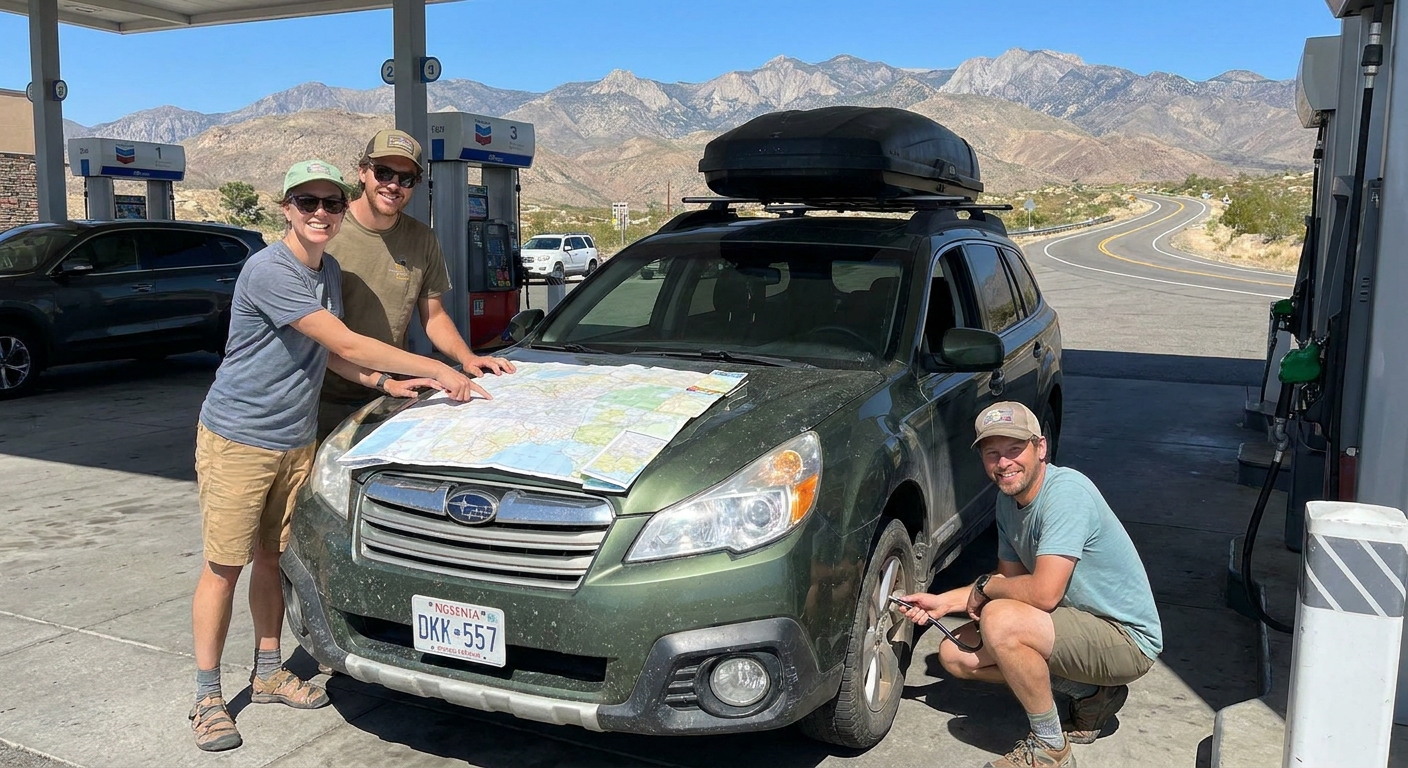
Spontaneous road trips sound fun until you’re hunting for fuel with the low-fuel light on, the kids are hungry, and your navigation drops out of service. A relaxed trip doesn’t mean a careless trip—it means building simple habits that keep hassles small and fun levels high.
Why “No-Stress” Beats “No-Plan” on a Road Trip
Whether you’re daily-driving a 10-year-old sedan or piloting a tuned performance car, a low-stress road trip comes down to a few practical routines before and during the drive. These aren’t theoretical best practices; they’re the patterns experienced drivers quietly follow without making a big deal about it.
Below are five real-world habits that separate smooth road trips from nightmare ones.
1. Prep Your Car Like You’ll Be 100 Miles From the Nearest Mechanic
Most mechanical problems show warning signs long before they turn into roadside disasters. A focused one-hour check a day or two before you leave usually catches them.
Do a “vitals” check, not a full service:
- Fluids: Engine oil, coolant, brake fluid, and windshield washer fluid.
- Look for low levels and fresh leaks on the ground after the car’s been parked.
- If you’re close to an oil-change interval, just do it before the trip. Peace of mind is worth more than squeezing out another 500 miles.
- Belts and hoses: Pop the hood and squeeze radiator hoses; they should feel firm, not mushy or cracked. Listen for belt squeaks on start-up.
- Battery: If it cranks slowly in the morning or the terminals are badly corroded, sort it before the trip. Weak batteries often die in extreme heat or cold—exactly when you don’t want to be stuck.
Tires: your real safety system
- Check tread depth (a quick trick: if the top of Lincoln’s head is visible on a U.S. penny, it’s getting low).
- Use a reliable gauge and set tire pressures to the values on the door jamb sticker, not the sidewall.
- Inspect the spare tire (if you have one) and make sure your jack and tools are actually in the car and usable.
These small checks catch 90% of the avoidable problems. You don’t need to be a mechanic—just observant.
2. Pack for Reality, Not Instagram
Overpacking is as painful as underpacking, especially when you’re digging through three duffel bags on the shoulder of the highway.
Divide gear into three categories:
Reach while driving
- Sunglasses, water bottle, snacks, phone charger, tissues, trash bag. - Keep these in the center console or door pockets. If you need it every hour, it shouldn’t be in the trunk.
Quick-access at stops
- Light jacket, hats, small first-aid kit, wet wipes, basic tools. - A small tote in the trunk or hatch you can grab in seconds.
Deep storage
- Extra fluids (oil, coolant), jumper cables or jump pack, compressor or tire inflator, more complete first-aid kit, folding chairs, etc. - These can be buried behind your daily-use bags.
A realistic emergency kit
- Compact jump starter (far more convenient than hoping for a stranger’s cables).
- Tire plug kit and a 12V compressor.
- Reflective triangle or LED flares.
- A few common tools: pliers, adjustable wrench, screwdriver with multiple bits, duct tape, zip ties.
This isn’t doomsday prepping; it’s the difference between a 20-minute DIY fix and a 2-hour wait for roadside assistance.
3. Plan Fuel, Food, and Rest Like Part of the Route
Navigation apps have made us lazy planners. You don’t need to script every mile, but you should know your refueling and rest rhythm.
Fuel strategy that doesn’t flirt with empty
- In unfamiliar areas, treat half a tank as empty. Refuel when you hit 50% unless stations are very frequent.
- In rural or mountain regions, zoom out on the map and confirm there are stations on your route; gaps of 80–100 miles are not uncommon.
Food and rest stops that make sense
- Plan to get out of the car every 2–3 hours. Even 5–10 minutes of walking helps circulation, alertness, and mood.
- Don’t build your day around drive-thrus. One real sit-down meal (even 30–40 minutes) can reset everyone’s patience.
Be weather and time-of-day smart
- Try to clear big cities outside rush hour—an extra coffee before or after is cheaper than idling in traffic.
- In hot climates, aim to cross exposed stretches in the cooler hours of morning or evening to reduce stress on both engine and passengers.
4. Drive Like You Want to Arrive With Energy, Not Just On Time
The fastest arrival time isn’t always the best arrival. How you drive affects fatigue as much as how far you go.
Set a realistic pace
- Decide your daily mileage ceiling before you leave. For most people, 400–500 miles is the upper limit of still-enjoyable; beyond that, it’s just grinding.
- Use cruise control where safe. It reduces fatigue and often improves fuel economy.
Use lanes intentionally
- Stick to the right lane unless passing. You’ll deal with fewer sudden lane changes and brake checks.
- Leave more following distance than you think you need. It smooths out traffic waves and keeps your stress level down.
Watch yourself as much as the road
- If you catch yourself turning the music up to stay awake, blinking hard, or missing an exit, you’re done for the moment. Pull off for a real break or a 15–20 minute nap.
- Caffeine is a short-term assist, not a fix. Combine it with a brief walk or stretch, not just more sitting.
Your goal is to arrive feeling like you took a trip, not like you survived a shift.
5. Keep Your Crew Comfortable and On the Same Page
A well-running car doesn’t guarantee a smooth trip—people can shut a trip down faster than a flat tire.
Temperature and noise: the silent arguments
- If you’ve got passengers, rear-seat comfort matters. Test airflow before you leave; if your car has rear vents, use them.
- Road noise can be more draining than you realize. Rotating playlists, podcasts, and some no-audio time keeps the cabin sane.
Agree on non-negotiables up front
- Decide before you start: Max daily driving time, who drives when, and what counts as a must-stop (photos, food, bathrooms, fuel).
- If you’re carpooling with other enthusiasts, agree on a pace (spirited vs. relaxed) and stick to it. Nothing ruins a trip like half the group wanting to push and half wanting to coast.
Build in a little unscheduled time
- Plan one or two short detours per day: a roadside overlook, a small-town bakery, a local car meet if timing works.
- Those 15–30 minute “unnecessary” stops usually become the most remembered parts of the trip.
Bringing It All Together
Low-stress road trips aren’t about over-planning; they’re about removing the predictable headaches so you can enjoy the unexpected moments. Give your car a quick but honest pre-trip check, pack as if you’ll actually need to find things, and treat fuel, food, and rest as part of the journey—not interruptions.
Do that, drive at a pace your body can handle, and keep everyone in the car in the loop. You’ll arrive not just with photos and mileage, but with the energy to enjoy wherever the road took you.